From Rice Husks to Renewable Power: Circular Supercapacitors Driving ASEAN’s Energy Transition

by Christian Abhipraya Keintjem
01 June 2026
Introduction
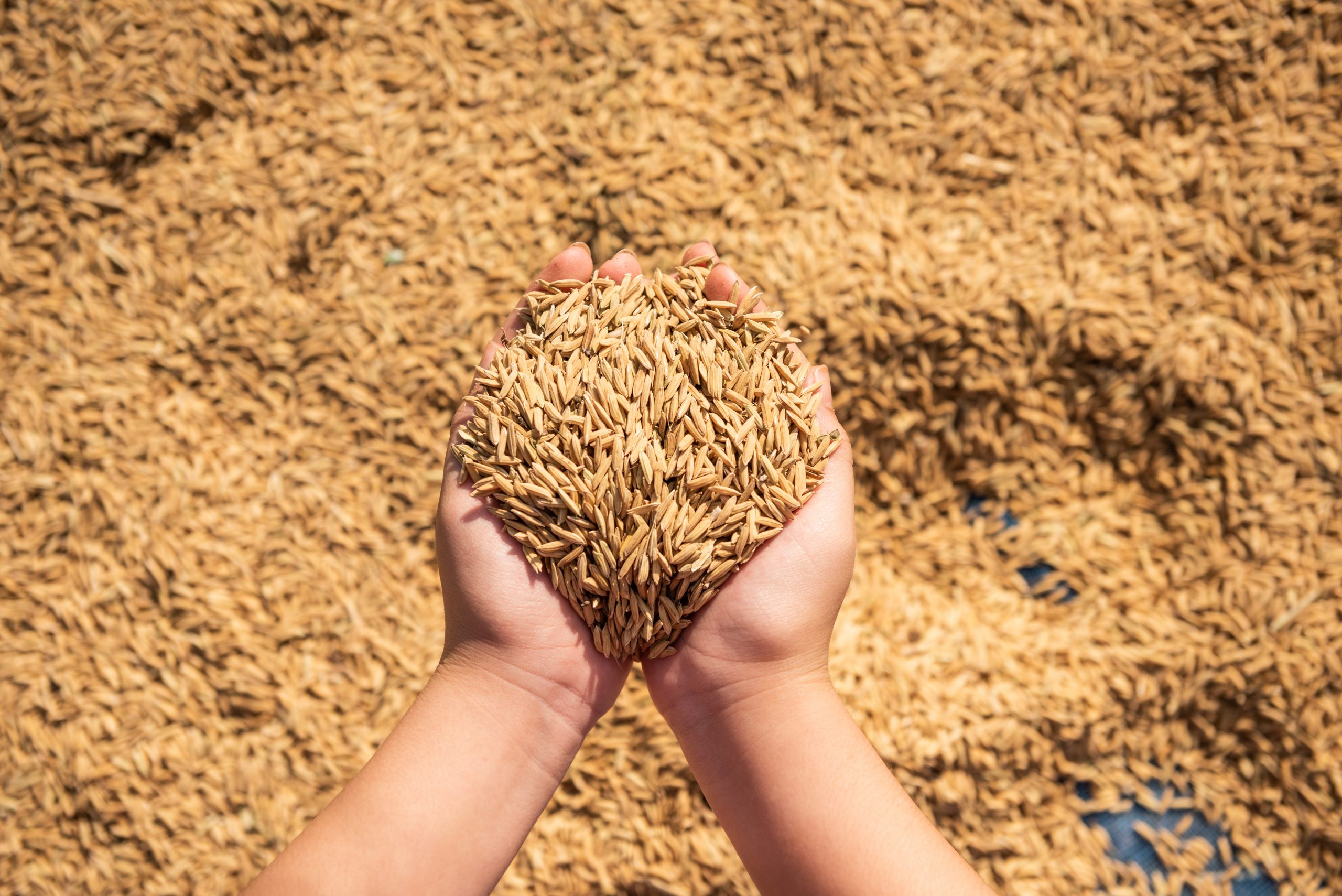
From the lush rice fields of Bali to the vast paddies of Vietnam, rice is life for most Asian countries. Yet the by-product of this staple crop, millions of tonnes of husks, is often burned or left to rot, releasing smoke that worsens air quality and adds to emissions in a region already struggling to balance rising energy demand with climate commitments (Matin et al., 2023b). However, what if this waste is one of ASEAN’s most overlooked energy resources? Rich in carbon and silica, rice husks can be transformed into advanced carbon materials, a feedstock hiding in plain sight.
The answer is to reimagine husks as a building block of the clean energy transition. As such, a rice husk–based supercapacitor can be developed to turn residues into affordable, circular, and climate-positive storage devices. This article discusses the innovation that shows how energy access and climate action can advance together, directly contributing to SDG 7 (Affordable and Clean Energy), SDG 12 (Responsible Consumption and Production), and SDG 13 (Climate Action).
Regional Context & Challenges
ASEAN’s energy demand is projected to increase threefold by 2050, while fossil fuels still account for over 80 percent of its supply (ACE, 2022). Electrification rates are improving, but rural communities in Indonesia, Myanmar, and the Philippines still face unreliable power supply (ACE, 2022). Current storage systems depend heavily on imported lithium-ion batteries. While effective, they are costly, resource-intensive, and reliant on critical minerals concentrated outside the region (U.S. DOE, 2023). Mining these materials carries heavy social and environmental costs (Dissanayake & Kularatna-Abeywardana, 2024).
Meanwhile, agriculture produces vast amounts of waste. ASEAN generates 30–40 million tonnes of rice husks annually (ASEAN Secretariat, 2022). Much of this is burned, releasing CO₂ and fine particulates that harm both the climate and public health (Teo et al., 2016). Farmers are left with little choice, often absorbing the burden of disposal without benefit. Yet this so-called waste is precisely the carbon-rich structure needed for advanced energy storage materials.
Innovation in Action
Supercapacitors (also called ultracapacitors) store energy not through chemical reactions but by accumulating charges on porous electrodes. They deliver extremely fast charges and discharges, long lifespans, and high-power output (DOE, 2023). Their energy density is lower than batteries, but their power density and durability make them ideal for applications like microgrid stabilisation, EV power bursts, or solar backup (Jovanović et al., 2025).
Evidently, rice husks are a strong material candidate for supercapacitor electrodes. Carbonising husks through pyrolysis produces porous activated carbon, though the silica content must be managed. Studies across Asia confirm the potential: nanoporous husk carbon in Wuhan achieved 250 F/g capacitance with high stability (Xu et al., 2014); Malaysian researchers produced high-surface-area electrodes with 147 F/g (Teo et al., 2016); graphene-modified husk carbons in Kazakhstan reached nearly 300 F/g (Yeleuov et al., 2020); and a molten salt method simplified processing while enhancing pore structures (Liu et al., 2022).
Through research and utilization of study results, we have developed a prototype supercapacitor that uses husk-derived biochar electrodes. It is deliberately simple, modular, and designed for replication. The proposed solution is to provide a cost-effective replacement to current existing supercapacitors with other electrode materials so that once they are spent, the husk-based electrode carbon can be returned to the soil as biochar, completing the loop from the field to the device and back again.
Connecting to the SDGs
The implications for ASEAN’s sustainable development goals are clear. For SDG 7, husk-based supercapacitors offer low-cost storage that supports rural microgrids, EV systems, and solar-powered agritech devices, addressing gaps in energy access. For SDG 12, the model exemplifies circularity: agricultural residues become valuable products, while end-of-life components are reintegrated into soil. For SDG 13, the approach reduces emissions by displacing open burning and sequestering carbon in soils. From an ethical standpoint, farmers benefit by gaining new value chains as suppliers of husks. Thus, circular energy storage reduces emissions, enhances resilience, and creates fairer economic opportunities.
Scalability and Market Potential
Currently, the potential for scalability is immense. With over 30 million tonnes of husks produced annually in ASEAN, processing even a fraction can supply material for millions of devices (ASEAN Secretariat, 2022). Existing infrastructure supports this: pyrolysis plants already process husks into biochar, which can be upgraded for electrodes (Liu et al., 2022).
Policy and practice are beginning to align. Thailand has incentivized biomass cogeneration through tax holidays and feed-in tariffs, supporting dozens of husk-fired plants (Maw Maw Tun et al., 2019). In Cambodia, HUSK Ventures and Atmosfair built a pyrolysis plant processing six tonnes of husks daily, sequestering 750 tonnes of CO₂ annually, with plans to expand into Vietnam (Atmosfair, 2025). These examples show that husk valorization is not theoretical, but it has already delivered climate and agricultural benefits.
Globally, the supercapacitor market was valued at USD 1.5 billion in 2021 and is projected to grow tenfold by 2030 (SNS Insider, 2023), thus marking massive market potential. ASEAN can carve out a niche by leveraging its agricultural residues, offering a competitive, locally grounded pathway.
Proposed Solution/Business Prototype
To realize this business prototype, establishing partnerships and conducting pilot projects with electronics manufacturers, automotive manufacturers, and power generation industries to implement the use of these supercapacitors in their products are the vital next steps. From a business standpoint, manufacturers can see this innovation as a solution to lowering their operational costs and increasing their earnings. Not only will implementing rice-husk-based supercapacitors be a strong ESG strategy, but the innovation will also be cost-effective because the raw material is sourced from an abundant waste. Furthermore, rice-husk supercapacitors themselves can be used to power the machines required for their pyrolysis production process, thus closing the circular production loop.
Challenges and Ethical Considerations
However, implementation barriers remain. Technically, husk carbons require optimization of pore structures, surface chemistry, and durability. Binder materials and fabrication processes must also become more scalable (Yeleuov et al., 2020).
Additionally, policy gaps are evident: most ASEAN energy frameworks recognise biochar as a soil input but not as an energy material. Standards and certifications will be essential. Financing is also a hurdle, as pilot projects demand investment, and smallholder farmers need to be integrated equitably into supply chains. Ethically, ensuring a just transition is vital. Farmers and rural cooperatives must have their share of the benefits. Mechanisms like carbon credits and extended producer responsibility (EPR) can support fair distribution of value.
For example, Myanmar’s experience highlights both potential and barriers. By 2019, 39 husk energy projects, from briquette production to village gasifiers, had received support from donor funds, powering some remote communities (Mongabay, 2019). Yet entrepreneurs still faced financial challenges without stable policy incentives. These lessons stress the need for systemic support to scale husk-based solutions.
The Way Forward
Nonetheless, the way forward is clear. Pilot projects in major rice producers like Indonesia and Vietnam can prove the feasibility of agritech and rural microgrids. Partnerships between universities, pyrolysis operators, and private firms will accelerate testing and certification. Policymakers should integrate biomass-based storage into ASEAN energy frameworks, while carbon market mechanisms can enhance financial viability by recognising the negative emissions of husk biochar.
Conclusion
Ultimately, ASEAN’s clean energy transition cannot rely only on imported technologies. Meeting the demand and climate goals requires drawing on regional strengths, especially its agricultural abundance. Rice husk supercapacitors show how waste can be transformed into resilience: powering villages, supporting farmers, and storing renewable energy.
By scaling circular innovations like these, ASEAN can advance the SDGs 7, 12, and 13 simultaneously. Farmers benefit from new income, communities gain reliable power, and the climate gains a carbon-negative solution. The challenge is no longer about whether or not this is possible, but how quickly it can be implemented. Turning agricultural waste into energy storage is not just an innovation. It is a pathway to a fairer, more sustainable future for ASEAN.
Christian Abhipraya Keintjem is a member of the Faculty of Engineering and Technology (FET), Department of Mechanical Engineering at Sampoerna University. He is a participant in the BESTS 2025 Programme (Building Entrepreneurial Mindset for Sustainable Technology and Society), a student exchange initiative between Sampoerna University and the Institute of Science Tokyo. The ASEAN Centre for Energy (ACE), through the ASEAN Climate Change and Energy Project (ACCEPT), contributes to this programme as part of its youth engagement initiative.
The views, opinions, and information expressed in this article were compiled from sources believed to be reliable for information and sharing purposes only, and are solely those of the writer/s. They do not necessarily reflect the views and opinions of the ASEAN Centre for Energy (ACE) or the ASEAN Member States. Any use of this article’s content should be by ACE’s permission.