Breaking the Cycle of Congestion: A Smart Mobility Platform for Jakarta

by Yoshikawa Hirono
4 May 2026
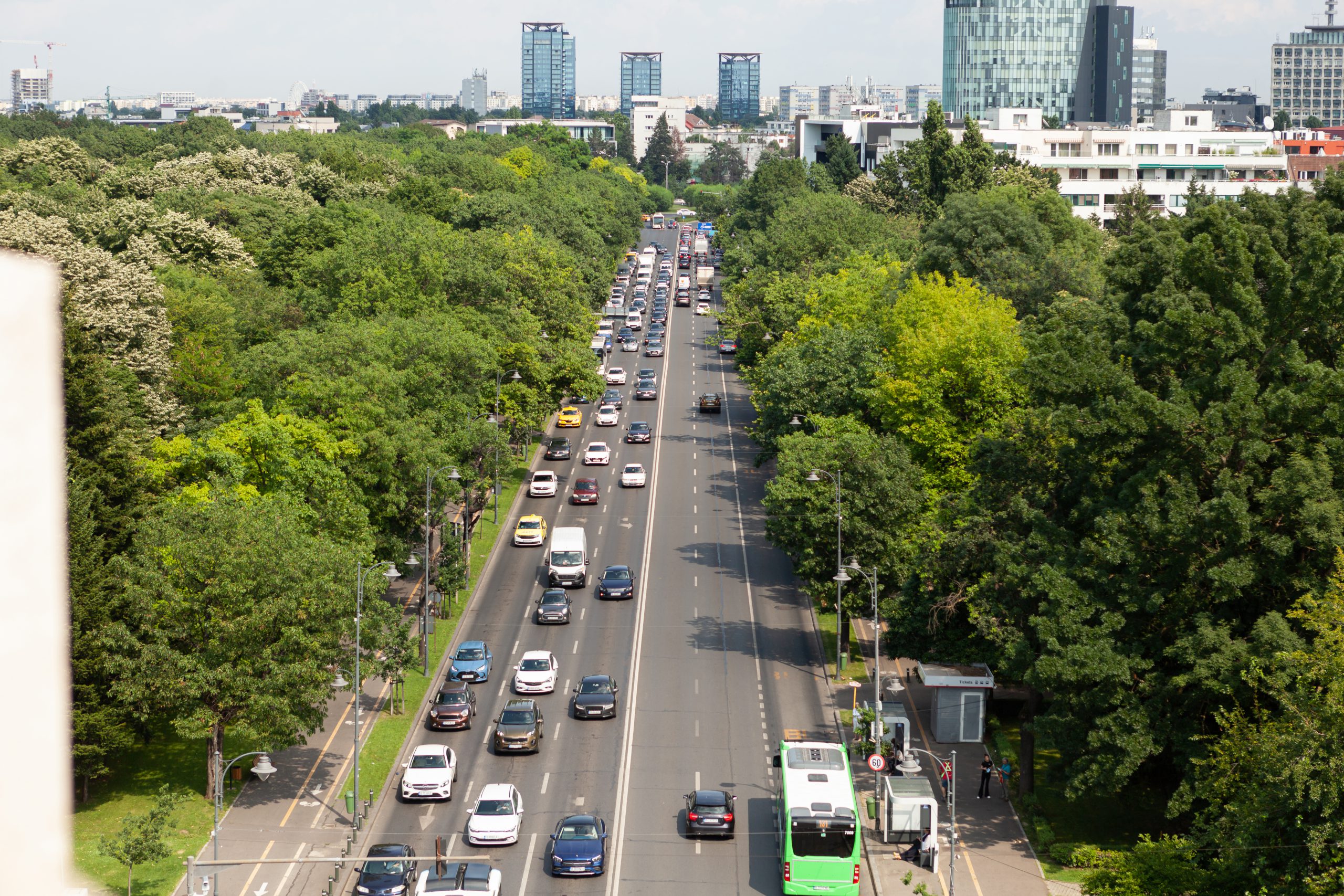
In many major cities across ASEAN, daily rush hours are greeted by endless lines of vehicles, filling the air with combustion gases. This routine reflects a deeper and serious challenge faced by large cities in Southeast Asia, including Jakarta. This article elaborates on a proposed model of “Smart Traffic Platform Application” that connects mobile applications with urban traffic control systems in Jakarta. This model is based on recent data, observations, and research across ASEAN countries, and it could deliver key solutions to the traffic crisis while addressing advancement of the Sustainable Development Goals (SDG).
The Triple Crisis of Energy, Environment, and Economy
Rapid urbanisation and population growth in Jakarta have fueled a surge in the number of cars and motorcycles on the streets, making traffic congestion a daily challenge in the city. Beyond time loss, congestion wastes fuel, raises CO₂ emissions, and undermines energy security. According to the International Energy Agency (2025), the transport sector contributes to around 23% of Indonesia’s energy-related CO₂ emissions, with road traffic alone producing around 147 million tons in 2022. Fuel inefficiency from idling and stop-and-go traffic further deepens the reliance on imported fuels.
Air pollution is another severe consequence. According to Clean Air for Health, in Jakarta, PM2.5 levels can exceed seven times of WHO guidelines, with vehicle exhaust a primary cause, posing major health risks. Economically, congestion costs the Jakarta metropolitan area about IDR100 trillion annually, roughly 4% of its GDP.
At the root of the problem is structural imbalance. For instance, limited road expansion (only 0.3% per year) caused the overcrowd of traffic congestion while vehicle ownership has risen sharply, especially motorcycles (76% of all vehicles). Public transport remains uncompetitive in speed, cost, and convenience, reinforcing reliance on motorcycles and perpetuating a cycle of congestion and pollution. Breaking this cycle requires a dual strategy: improving current traffic efficiency while investing in reliable, accessible public transportation.
A National Smart Mobility Platform: Evolving Towards a Predictive Model
This proposed platform introduces a National Smart Mobility Platform, a multi-layered system that integrates artificial intelligence, IoT sensors, and big data analytics. The platform is designed to transform reactive traffic management into a proactive and predictive model, preventing congestion before it occurs and ensuring smoother traffic flow across the city.
Why it matters
The proposed ‘National Smart Mobility Platform’ is not only about mobility but also a foundation for sustainable urban development. By reducing vehicle idling, such as keeping engines running at red lights or in traffic jams, and inefficient driving styles like sudden acceleration and frequent braking, the platform helps cut unnecessary fuel use. While idling, the engines continue burning fuel without moving the vehicle, and the stop-and-go driving forces engines to consume extra energy each time the car accelerates. Smoother traffic flow reduces these inefficiencies, leading to lower fuel consumption. This directly improves energy efficiency and reduces dependence on fossil fuels, thereby supporting the goals of SDG 7 on affordable and clean energy. At the same time, the promotion of public transport and shared mobility encourages a sustainable shift in urban transit, while a 20-percent improvement in urban delays is estimated to cut millions of tons of CO₂ annually, advancing SDG 13 on climate action. Moreover, shorter travel times and improved air quality will expand access to mobility for low-income populations, aligning with SDG 12 on responsible consumption and production. It applies circular principles by optimizing data and traffic resources. Together, these measures improve daily travel in Jakarta, strengthen urban resilience, and ensure long-term sustainability.
Scalability and Feasibility
The proposed platform is a modular national digital infrastructure designed for several phased implementations. The initial deployment will apply AI-driven signal control in Jakarta, leveraging its existing Intelligent Traffic Control System, before expanding it into a central data hub, citizen-facing services, and integration with Mobility as a Service and emergency response. Success in Jakarta can accelerate replication in other big cities like Surabaya, Bandung, and others, creating a standardized national network either nationally or on regional level. There is also a promising opportunity for multilateral synergy as regional pilots can also be implemented in neighboring ASEAN countries, such as Thailand, Vietnam, and Singapore. In addition, the platform holds potential for strong economic returns: cutting congestion losses by 20% can save 20 trillion Rupiah annually. Policy alignment ensures robust governmental planning for long-term transport plan. Thus, it becomes clear that this platform combines both scalability and feasibility, serving as a future-ready foundation for Indonesia’s urban mobility.
Platform Details: Four Core Layers
The proposed Smart Mobility Platform is built on four interconnected layers. The first is AI-driven traffic signal control, functioning as the city’s nervous system. In Bangkok, such systems reduced intersection delays by up to 41 percent. The second is a central data hub, the city’s brain, consolidating traffic and sensor data and applying machine learning to generate real-time forecasts and long-term insights. The third layer is a public transport integration module, acting as the circulatory system by linking MRT, LRT, and buses with priority signaling and real-time tracking to improve reliability and reduce motorcycle dependency. Finally, the real-time user information system serves as the interface, delivering accurate traffic updates via apps, digital signage, and navigation platforms.
Widespread Impact: Economic, Environmental, and Social
The platform’s benefits extend across economic, environmental, and social dimensions. Economically, it can recover billions of rupiah by mitigating congestion losses. Environmentally, it addresses nearly half of Jakarta’s carbon emissions, directly supporting Indonesia’s 2060 net-zero emissions target. Socially, it enhances quality of life by reducing commuting stress, improving logistics efficiency, and raising labor productivity, thereby strengthening Jakarta’s global competitiveness and investment appeal.
Challenges and Strategic Directions for Implementation
Realizing this system, however, requires overcoming several challenges in policymaking, financial planning, technology, and social behavior. Policymakers must establish clear rules and regulations for data sharing, as traffic control and information remain under government jurisdiction. Financially, large initial investments demand sustainable schemes such as public-private partnerships. Technologically, disparities in communication infrastructure between urban and suburban areas complicate standardized implementation. On behavioral perspective, success hinges on the citizens’ willingness to use public transportation and engage with the app.
To address these, a phased rollout is recommended, beginning with pilot projects on major corridors to demonstrate effectiveness. Strengthening Public-Private Partnership is essential, fostering collaboration among government, industry, and universities for data sharing and analysis. A citizen-centric approach, integrating user feedback, can boost public acceptance. Finally, long-term financing should leverage green bonds and international support.
Implementation will be phased. In the first stage, AI traffic control will be piloted at 65 intersections already equipped with basic systems. Subsequent expansion will extend to over 500 intersections alongside the development of the central data hub. By the fifth year and beyond, nationwide rollout is envisioned, positioning Indonesia as a regional leader in smart urban mobility. This collaborative, incremental strategy provides a clear pathway from prototype to city-wide deployment, and ultimately to national adoption.
Improving urban transportation is the key not only to reduce congestion but also to simultaneously improving energy efficiency and combating climate change. The case of Jakarta demonstrates the immense potential that circular innovation holds at the city level with high density population. Advancing transportation reform that combines a circular mindset with digital technology is essential for building a cleaner and more equitable society. However, a smart transportation system alone cannot change the future. The path to a sustainable and equitable urban future can only be paved when technology and public awareness engage and advance in tandem.
Yoshikawa Hirono is a student at the School of Engineering, Department of Systems and Control Engineering, Institute of Science Tokyo. He is a participant in the BESTS 2025 Programme (Building Entrepreneurial Mindset for Sustainable Technology and Society), a student exchange initiative between Sampoerna University and the Institute of Science Tokyo. The ASEAN Centre for Energy, through the ASEAN Climate Change and Energy Project (ACCEPT), contributes to this programme as part of its youth engagement initiative.
The views, opinions, and information expressed in this article were compiled from sources believed to be reliable for information and sharing purposes only, and are solely those of the writer/s. They do not necessarily reflect the views and opinions of the ASEAN Centre for Energy (ACE) or the ASEAN Member States. Any use of this article’s content should be by ACE’s permission.