
Jakarta, 31 August 2026
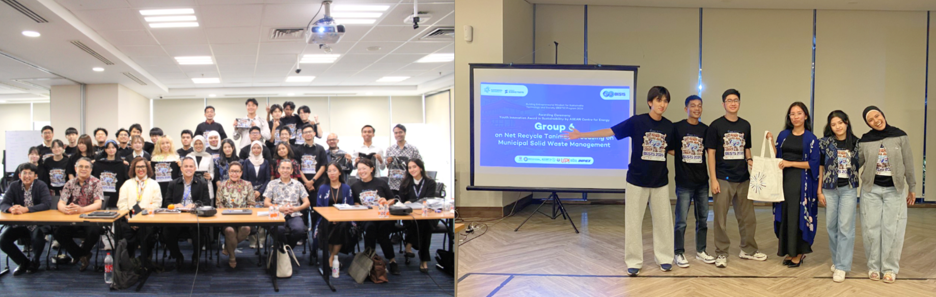
Photo 1 and 2. Group Photo of the BESTS Programme Final Presentation (left) and Recipients of the “Youth Innovation Award in Sustainability” by ACE (right)
Jakarta, 24 August 2026 – Following an intensive two-week collaboration exploring sustainability and entrepreneurship, the Building Entrepreneurial Mindset for Sustainable Technology and Society (BESTS) Programme 2026 culminated in a Final Presentation session at Sampoerna University, Jakarta. Continuing the momentum from the students’ company visit to the ASEAN Centre for Energy (ACE) the previous weeks, the ASEAN Climate Change and Energy Project (ACCEPT) II continued its active involvement in the programme by evaluating the delegates’ capstone sustainability innovations. For ACE and ACCEPT, this collaboration serves as an extension of their youth engagement initiatives, providing a dynamic platform where the younger generation can translate complex energy-climate policies into tangible, entrepreneurial solutions.
After the session was opened by Dr. Farid Triawan, the General Chair of BESTS 2026, the event transitioned into the introduction of the judging panel. The judging segment was opened by Nathania Azalia, Research Analyst of ACCEPT II, who framed the event within the broader mission of driving youth involvement in the region’s energy transition. She noted that seeing her peers continue to hold onto hope and actively take steps to address global concerns was deeply heartwarming. The panel also featured Prof. Eri Ota, Co-Chair of BESTS 2026 from the Institute of Science Tokyo, alongside Dr. Anak Agung Perwira Redi, Head of Industrial Engineering study program at Sampoerna University, and Atiya Ramadhani Akbar, Sustainability & ESG Analyst from ID Survey, who commended the promising ideas she had observed throughout the week.
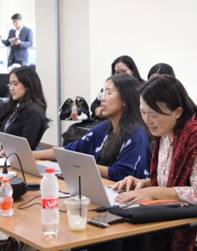
Photo 3. Nathania Azalia, Research Analyst of ACCEPT II, evaluating presentations as a panel judge.
The delegates’ capstone presentations wove together diverse sustainability challenges, directly engaging with issues central to ACE and ACCEPT’s mission. The six student groups pitched the following entrepreneurial solutions.
Group 1, with their presentation titled “ZYTHA,” tackled the region’s mounting solid waste burden by proposing to convert municipal waste from a regional landfill in Sumatra into refuse-derived fuel (RDF) as a coal substitute. This sparked discussion among the panel regarding its feasibility. Adding a policy perspective, Nathania Azalia pointed out that Waste-to-Energy is a massive and expanding issue in Indonesia, referencing the 33 WTE plants planned under the Danantara initiative. She stressed that waste management requires deep collaboration with the government to streamline necessary infrastructure.
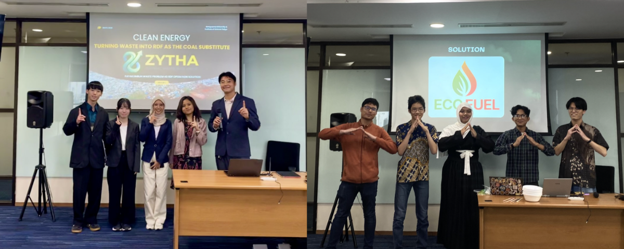
Photo 4 and 5. Group 1 “ZYTHA” (left) and Group 3 “Eco Fuel” (right)
The theme of waste transformation continued with Group 3’s presentation, “Eco Fuel.” Addressing the dual challenges of high tractor fuel costs for rural farmers and the accumulation of low-value plastic waste, such as sachets often rejected by local waste banks, the team pitched an innovative zero-waste pyrolysis process. Similarly addressing waste through a circular economy lens, Group 2 presented “Eco-Smart Orange,” proposing an AI-guided app paired with a bio-based cleaning formula made from upcycled orange peel waste. The system is designed to help commercial laundries and secondhand fashion resellers safely restore stained garments, providing a sustainable alternative to harsh chemical bleaches.
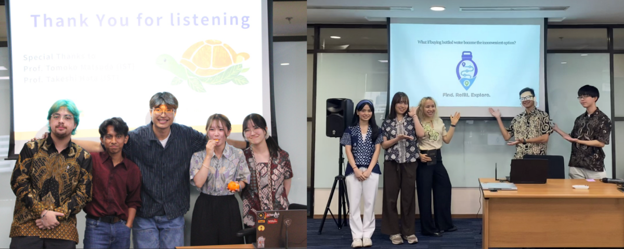
Photo 6 and 7. Group 2 “Eco Smart Orange” (left) and Group 4 “Eco Refill Network” (right)
Expanding the focus to sustainable services, Group 4 pitched “Water Refill Network,” aiming to interconnect existing water refill stations for travellers to reduce single-use plastics. By purchasing a premium reusable bottle linked to an app, users would gain access to free refills while partner businesses benefit from geotargeted advertisements that drive foot traffic.
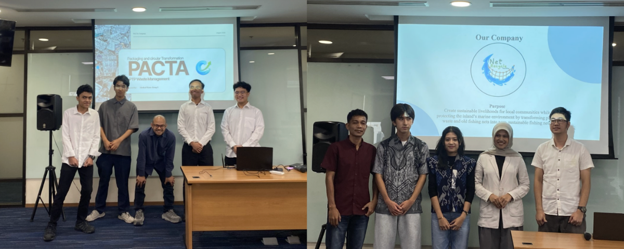
Photo 8 and 9. Group 5 “PACTA” and Group 6 “Net Recycle Tanimbar”
Group 5 presented “PACTA,” a closed-loop electrostatic separation system for pharmaceutical blister packaging waste. Because blister packs consist of tightly fused aluminum and plastic that are notoriously difficult to recycle, this technology cleanly separates the materials without washing, allowing the recovered plastic to be compression-moulded into verified recycled sheets for resale. Finally, focusing on Municipal Solid Waste Management, Group 6 presented “Net Recycle Tanimbar.” Proposing to recycle discarded fishing nets into new nets to combat marine “ghost fishing,” the team powerfully explained to the judges that they chose to manufacture finished nets rather than intermediate pellets to provide concrete proof to local fishermen that the business existed to support their livelihoods. Furthermore, the model aims to serve these small-scale fishermen through a deposit-based discount system, actively creating green jobs while clearing hazardous waste from coastal ecosystems.
Following the final pitch sessions, the event transitioned into a gala dinner, serving as both a formal awarding ceremony and farewell before the two-week program officially concluded. Highlighting ACE’s commitment to empowering young innovators, the highly commendable “Youth Innovation Award in Sustainability” by the ASEAN Centre for Energy was presented to Group 6 for “Net Recycle Tanimbar.” This award recognised their outstanding and community-driven approach to municipal solid waste management, proving that the most effective regional solutions often place local livelihoods at their core.
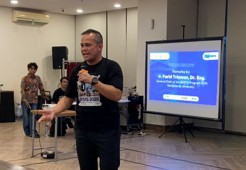
Photo 10. Closing Speech by Dr. Farid Triawan, General Chair of BESTS 2026
The evening drew to a close with parting reflections that underscored the broader purpose of the two-week program. Expressing gratitude to the visiting delegation, Dr. Surya Danusaputro Liman, Vice Rector of Academic Affairs, voiced his hope that the deep cross-cultural camaraderie forged between Sampoerna University and the Institute of Science Tokyo would continue to flourish. This sentiment of shared connection was echoed by Dr. Farid Triawan, who reminded the students that despite their different backgrounds, they share a unified global responsibility to apply their education to real-world problems. Bringing the night to an end, Prof. Eri Ota left the delegates with a final challenge: to recognise the profound privilege of their education and to actively use their newly honed skills as a dedicated force to enhance society. Ultimately, as these young innovators carry their ideas forward, ACE and ACCEPT reaffirm their commitment to such youth initiatives, ensuring that the next generation remains at the forefront of driving a secure, inclusive, and sustainable energy-climate transition across the ASEAN region.
Detailed information on ACCEPT II can be found at https://accept.aseanenergy.org/
Follow our social media to stay updated on ASEAN’s energy-climate nexus and ACCEPT activities.