ARNECC Webinar – ASEAN’s Energy Future: Key Insights from the 9th ASEAN Energy Outlook (AEO9)

Jakarta, 28 October 2026
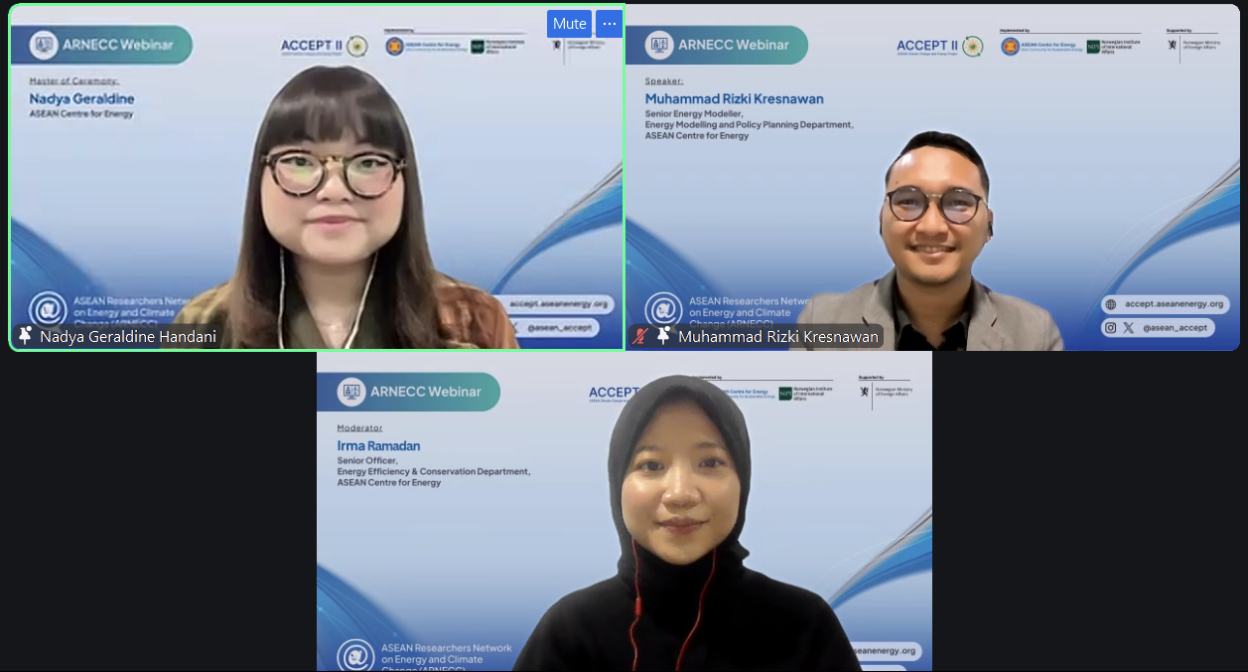
Photo 1. (left to right) Nadya Geraldine Handani, Research Assistant at ACCEPT, Mr. Muhammad Rizki Kresnawan, Senior Energy Modeller in the Energy Modelling and Policy Planning Department at ACE, and Ms. Irma Ramadan, Senior Officer in the Energy Efficiency and Conservation Department at ACE.
Jakarta, 29 October 2026 – The ASEAN Climate Change and Energy Project (ACCEPT) through the ASEAN Researchers Network on Energy and Climate Change (ARNECC) held a special ARNECC Webinar on the topic of “ASEAN’s Energy Future: Key Insights from the 9th ASEAN Energy Outlook”. In this session, ACCEPT II invited Mr Muhammad Rizki Kresnawan, Senior Energy Modeller in the Energy Modelling and Policy Planning Department at the ASEAN Centre for Energy (ACE), to present the key findings of ACE’s newly published flagship publication, 9th ASEAN Energy Outlook (AEO9).
The webinar was opened by Nadya Geraldine Handani, Research Assistant at ACCEPT, as Master of Ceremony, and moderated by Ms Irma Ramadan, Senior Officer in the Energy Efficiency and Conservation Department at ACE. The AEO9 was officially launched on 8 October 2026 during the 26th ASEAN Energy Business Forum (AEBF-26) in Manila, Philippines. It examines ASEAN’s energy landscape from 2025 to 2060, covering energy demand and supply, technology deployment, and emissions under different scenarios. ACCEPT supported its development through coordination, modelling work, and assessments of the socioeconomic implications of the energy transition, including the most ambitious scenario.
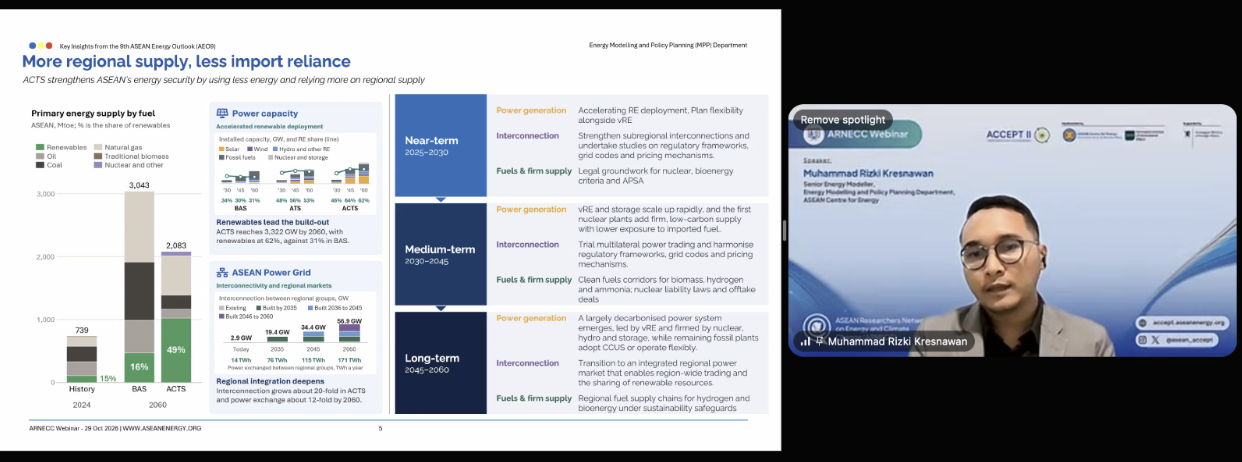
Photo 2. Mr Rizki presenting key insights from AEO9
Introduction to the AEO9
The session began with the presentation by Mr Rizki, who placed AEO9 within ASEAN’s long-term vision of a secure, resilient, and interconnected low-carbon energy future by 2045 and the ASEAN Plan of Action for Energy Cooperation (APAEC) 2026–2030. In AEO9, three scenarios frame the analysis: a Baseline Scenario (BAS) that continues current national trajectories, an AMS Target Scenario (ATS) in which Member States progress towards their stated policies and targets, and an ASEAN Coordinated Transition Scenario (ACTS), a regionally optimised pathway where Member States strengthen coordination on electricity trade, energy efficiency, technology, and investment.
On where ASEAN stands today, Mr Rizki noted that between 2015 and 2024, ASEAN added about 62 gigawatts (GW) of renewable capacity but around 91 GW of fossil capacity. Looking ahead, energy demand is projected to rise almost fourfold and under the ACTS, efficiency and electrification could nearly halve final energy demand by 2060 compared with the baseline, with electricity reaching 57.2% of final consumption compared with 27.1% in the ATS. On the supply side, the ACTS uses about a third less primary energy than the baseline, with close to half of it from renewables and fossil fuel supply falling by around 60%, reducing import and price risks while gas remains the key fossil fuel to secure. Installed power capacity reaches 3,322 GW by 2060, with renewables at 62% of the mix dominated by solar, wind, and hydropower. Regional integration also deepens, with interconnection under the ASEAN Power Grid growing about 20-fold and power exchanged between regional groups growing about 12-fold.
Challenges ahead, from the Outlook
Beyond the modelled pathways, Mr Rizki outlined the barriers AEO9 identifies, including rising oil costs, the missing delivery of existing targets, and the labour and social dimensions of a just and inclusive transition, alongside indicative investment needs of around USD 405 billion a year, or USD 14.1 trillion in total. He then presented a phased approach for transport, industry, buildings, power, grids, and fuels across the near, medium, and long term, and seven policy directions that could turn the pathways into coordinated action, from harmonised efficiency standards and reduced oil reliance in transport to finance aligned with investment priorities and stronger institutions that keep the transition fair. These would be delivered at three levels: national standards and rules set by Member States, common baselines and methods agreed by ASEAN, and joint delivery of shared assets such as cross-border grids. He concluded that institutional readiness, a wider view of energy security, and a long-term regional vision to at least 2050 can turn ambition into implementation.
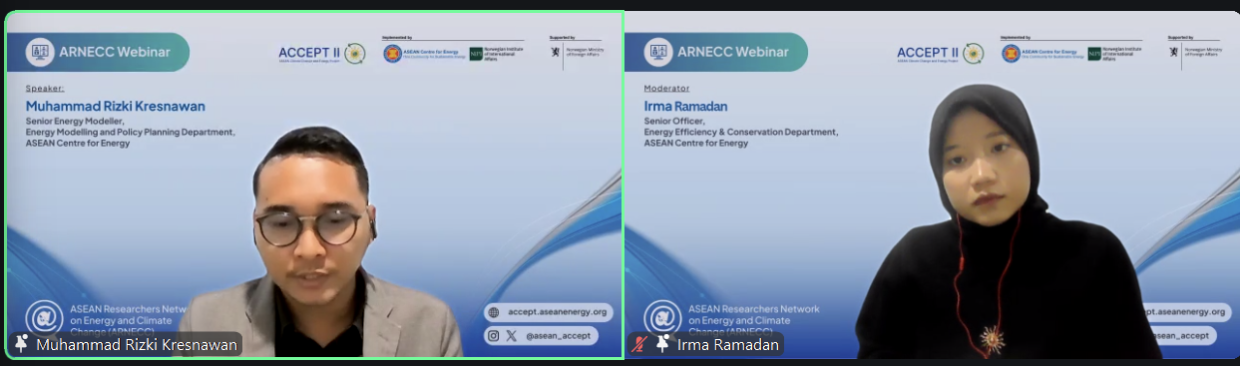
Photo 3. Mr. Rizki and Ms. Irma during the moderated discussion session.
The presentation was followed by a moderated discussion between Ms Irma and Mr Rizki. Discussing the additional insights on the ACTS, the Outlook’s most ambitious pathway, provides compared with the previous edition, Mr Rizki explained that the ACTS asks a practical question: what can ASEAN achieve if Member States plan together? It is a coordinated pathway that highlights both the mix of renewable energy and the delivery of energy, including 15 new cross-border lines on top of the eight operating today. He highlighted that it is a coordinated transition scenario towards 2060 intended to emphasise concrete actions that are feasible for the region.
On the biggest challenges and opportunities in applying the ACTS, Mr Rizki said the challenge remains the delivery gap: the policies are already in place, but the question is how to make projects bankable and which additional policies are needed to move from the baseline to the ACTS. This requires more cooperation and more cross-border lines, while accounting for the different characteristics of each Member State. On how ASEAN can support workers affected by the transition, Mr Rizki explained that a just and inclusive transition cannot be fully modelled but is essential to consider. He called for requirement lists for future renewable energy projects that take local communities into account, communicate the transition in local languages and customs, and make people feel safe and included so that they feel a sense of belonging and help take care of these projects.
Question and Answer
The final part of the webinar focused on answering questions from participants. Asked about which findings policymakers should pay attention to now, Mr Rizki said all findings are important, and that milestones are set by the planning cycle, showing how much should change and which policies should be in place every five years. The transition, he said, is a marathon, so each milestone should work as a checklist, from interconnected power systems to other policies, combining small steps with a long-term vision.
Concluding the session with a key message, Mr Rizki emphasised that although many barriers and technical interventions need to be addressed, the transition brings economic benefits to the region and its people, and all of it can be solved with a vision. While technical parameters are fixed, a regional vision shared by all Member States is needed, because despite different national characteristics, the region should be unified by the same aim. People and technology can be built and learned, he said, but a vision is what the region needs for the future.
Through this webinar, it was highlighted that the way forward for the region is to close the gap between plans and delivery. AEO9 shows that ASEAN has the people, the technologies, and the policies to move towards a more secure, low-carbon energy future, but reaching it depends on making projects bankable, coordinating across borders so that renewable supply meets demand, and building institutions that can deliver at pace. Setting five-year milestones within a long-term regional vision, with a just and inclusive transition that brings local communities along, will be essential to turning the coordinated pathway into practice.
** Join our ASEAN Researchers Network on Climate Change (ARNECC) by registering yourself here. Become a part of our collaborative efforts to address pressing climate challenges and shape a sustainable future.
Detailed information on ACCEPT II can be found at https://accept.aseanenergy.org/
Follow our social media to stay updated on ASEAN’s energy-climate nexus and ACCEPT activities.