
Wednesday, 3 June 2026
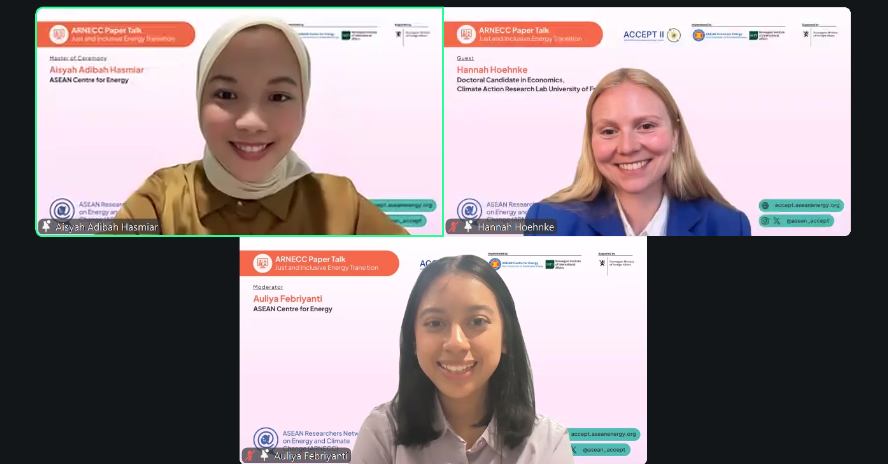
Photo 1. (Left to Right) Aisyah Adibah Hasmiar, Research Assistant of ACCEPT II, Ms. Hannah Hohnke, Doctoral Candidate in Economics, Climate Action Research Lab, University of Freiburg, and Ms. Auliya Febriyanti, Junior Research Analyst of ACE
Monday, 25 May 2026 – The ASEAN Climate Change and Energy Project (ACCEPT) Phase II through the ASEAN Researchers Network on Energy and Climate Change (ARNECC) held a new episode of Paper Talk on the series of Just and Inclusive Energy Transition (JIET). The episode featured Ms. Hannah Hoehnke, Doctoral Candidate in Economics at the Climate Action Research Lab, University of Freiburg, where she shared her latest research on the barriers in adopting clean energy transition.
The talk was opened by Ms. Aisyah Adibah Hasmiar, Research Assistant for ACCEPT II as Master of Ceremony, and moderated by Ms. Auliya Febriyanti, Junior Research Analyst at ACE.
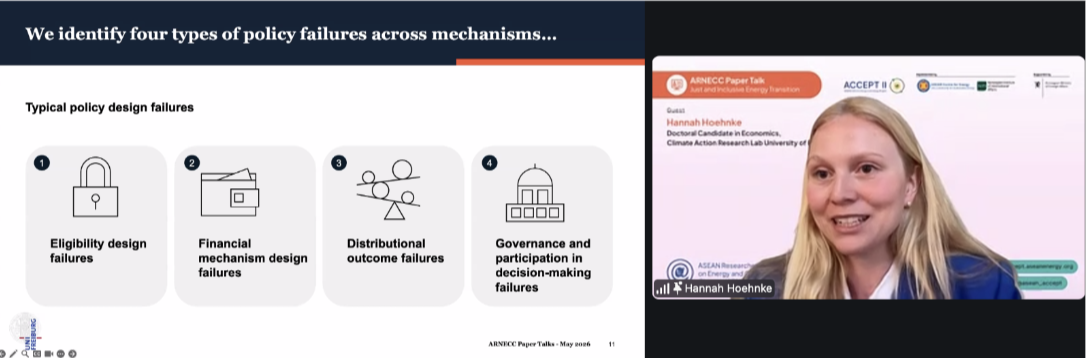
Photo 2. Ms. Hannah Hoehnke presenting the discussion of the paper
Ms. Hannah began her presentation on her recently published paper titled “Structural Barriers and Policy Pathways for a Just Clean Energy Transition” by outlining the three pillars of energy justice, namely distribution justice, procedural justice, which emphasises meaningful community participation in decision-making process and recognitional justice, which takes into account the equalities that may influence the transition process. She highlighted that energy justice plays a crucial role in achieving effective decarbonisation. According to Ms. Hannah, integrating principles of energy justice is essential not only for advancing deep decarbonisation efforts, but also for addressing underlying systemic inequalities that hinder a fair energy transition.
She further explained that transition toward clean energy is hindered by three levels of barriers. At the household level, the challenges include upfront capital and liquidity constraints, time preferences, split incentives, physical and housing constraints, and information gaps. At the community level, barriers arise from inadequate infrastructure, trust deficits, unequal financial access, while at institutional barriers are challenges that often intensify both community and household level barriers, such as complex administrative procedures.
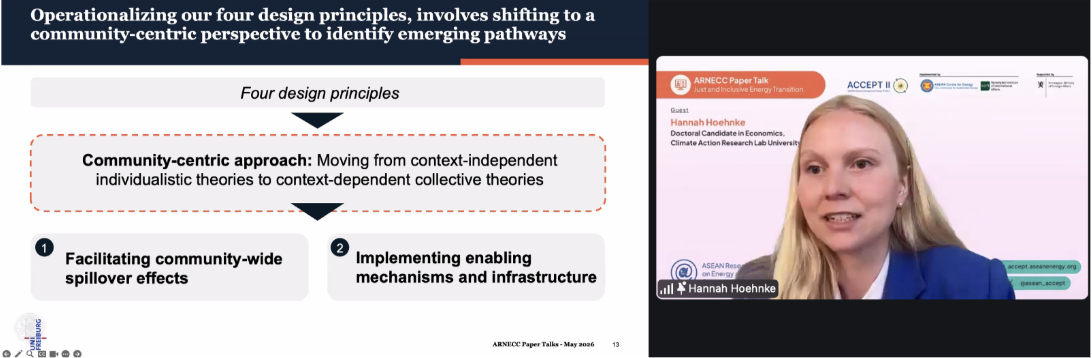
Photo 3. Ms. Hannah Hoehnke explained the importance of a community-centric approach
In response to the structural barriers, Ms. Hannah highlighted the importance of equitable and inclusive policy design for clean energy transition. Firstly, policies should adopt barrier-aware mechanisms by recognising and addressing the distinct challenges faced by different socioeconomic groups, ensuring that policies are appropriately targeted. Secondly, policies address time-aligned benefits, that is to tailor incentives to align with the time preferences of targeted households. Moreover, she highlighted the importance of administrative simplicity, stressing that reducing bureaucratic complexity is essential in making effective policies, and lastly, the need for community-embedded implementation, which involves adapting policies to local characteristics.
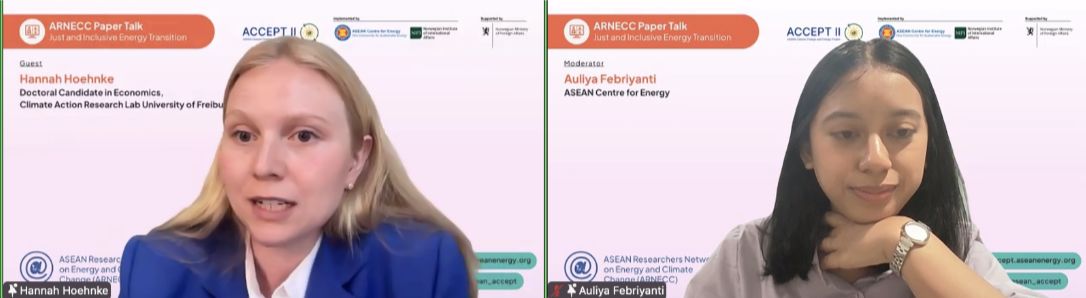
Photo 4. Ms. Hannah Hoehnke and Ms. Auliya Febriyanti during question and answer session
On the second half of the Paper Talk focuses on Q&A, the discussions highlighted the importance of being aware of distributional, procedural, and recognitional justice in energy policymaking. For a just and clean energy transition, there is a need to shift towards a community-based approach, ensuring that policies are tailored toward the needs and socioeconomic characteristics of the community. One of the questions inquired in the discussion session was on the importance of defining and identifying disadvantaged households within the context of energy justice and energy poverty, in which according to Ms. Hannah, although ASEAN does not yet have a unified definition, indicators such as the percentage of household income spent on energy are commonly used to assess energy insecurity. She emphasised the importance of collecting disaggregated data and conducting surveys to better understand which communities are most vulnerable and how existing inequalities can be addressed.
The discussion also focused heavily on community participation and governance in achieving a just energy transition. Ms. Hannah underlined that meaningful community-based participation requires equitable ownership structures, retention of benefits within communities, and governance through trusted institutions that reduce bureaucratic burdens. She further explained that governments, private actors, organisations, and households should work collectively as part of an interconnected ecosystem. Regarding infrastructure development, particularly in developing countries such as Indonesia, she noted that the state plays a critical role in building foundational energy infrastructure, while communities must collectively monitor implementation and accountability. She also highlighted the importance of subsidies, transparent reporting, and policies tailored to lower-income households’ time preferences and financial realities, especially since future-oriented subsidies are often less effective for economically vulnerable groups.
The discussion strongly reflected with ASEAN’s current energy transition landscape, where ensuring affordability, accessibility, and equity remains a key challenge alongside decarbonisation efforts. As reflected in the ASEAN Plan of Action for Energy Cooperation (APAEC) 2026–2030, sustainable energy development requires not only technological advancement and infrastructure investment but also meaningful community participation, inclusive governance, and collaboration among governments, private actors, and local communities. Given the diverse socio-economic conditions across ASEAN Member States, community-centred approaches, transparent governance, and targeted policy support are essential to ensuring that the benefits of the clean energy transition are distributed equitably. This highlights the importance of embedding local needs and perspectives into energy planning and implementation, enabling ASEAN to pursue a transition that is both environmentally sustainable and socially just.
As a way forward, the pathway towards clean energy requires prioritising targeted support for vulnerable households, simplifying administrative processes, and strengthening community participation in energy planning and implementation. Given the region’s diverse socio-economic conditions and varying levels of energy access, policies must be designed to address local realities while ensuring that no community is left behind. In line with APAEC 2026–2030, governments, private sector actors, civil society organisations, and local communities shall work collaboratively to promote inclusive governance, enhance accountability, and ensure that the benefits of the clean energy transition are distributed equitably across the region.
** Join our ASEAN Researchers Network on Climate Change (ARNECC) by registering yourself here. Become a part of our collaborative efforts to address pressing climate challenges and shape a sustainable future.
Detailed information on ACCEPT II can be found at https://accept.aseanenergy.org/
Follow our social media to stay updated on ASEAN’s energy-climate nexus and ACCEPT activities.