
Tuesday, 5 May 2026
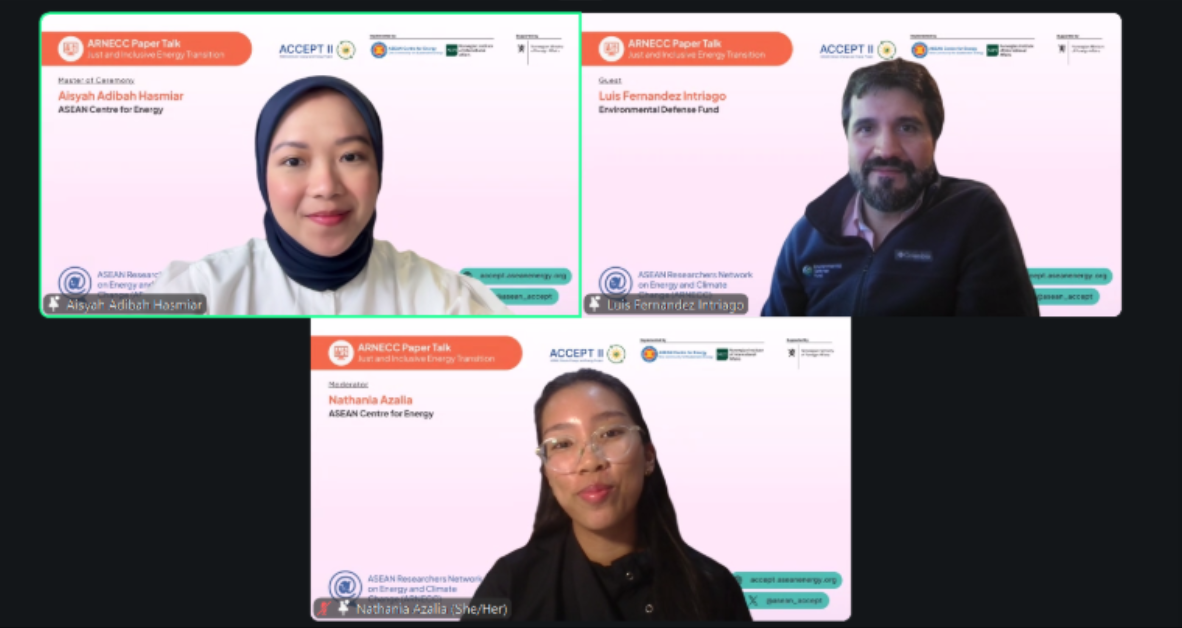
Photo 1. (Left to Right) Aisyah Adibah Hasmiar, Research Assistant of ACCEPT II, Ms. Nathania Azalia, Junior Research Analyst of ACE and Mr. Luis Fernandez Intriago, Economist at Environmental Defense Fund
Thursday, 30 April 2026 – The ASEAN Climate Change and Energy Project (ACCEPT) through the ASEAN Researchers Network on Energy and Climate Change (ARNECC) kickstarted the first episode of ARNECC Paper Talk in 2026 on the series of Just and Inclusive Energy Transition (JIET). In the latest episode, ACCEPT II invited Mr. Luis A. Fernández Intriago to share his findings from his recently published commentary paper entitled “Overcoming five key challenges to make the energy transition a just labor transition.”.
Photo 2. (Left to Right) Mr . Luis Fernandez Intriago, Economist at Environmental Defense Fund and Ms. Nathania Azalia, Junior Research Analyst of ACE
The talk was opened by Ms. Aisyah Adibah Hasmiar, Research Assistant for ACCEPT II as Master of Ceremony, and moderated by Ms. Nathania Azalia, Junior Research Analyst of ACE.
In the beginning of the session, Mr. Luis highlighted the importance of a just labour transition, as achieving net-zero requires overhauling the energy, transport, agriculture, and manufacturing sector, and without clear pathways protecting workers, communities will resist or delay the shift entirely. This is continued with an explanation on the methodology of the commentary paper, drawing on a 14-country analysis (7 developed and 7 developing countries) and structured dialogues with 30+ global economists, trade union representatives, government officials, and other experts.
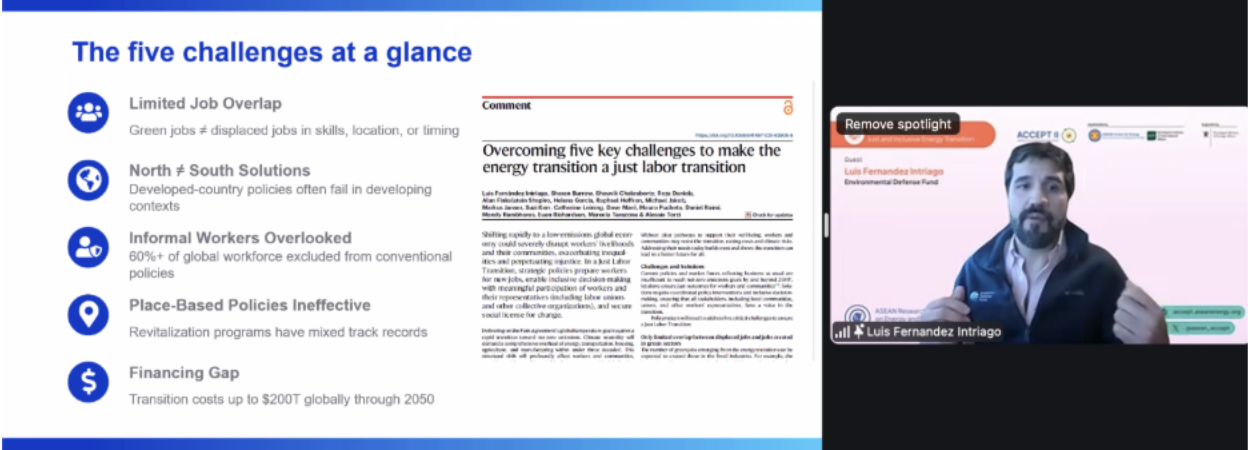
Photo 3. Mr. Luis Fernandez Intriago presenting the discussion of the paper
During the presentation, Mr. Luis explained how these country analysis and dialogues synthesised five main challenges that need to be addressed to achieve a just labour transition. These challenges are:
To measure the progress of a just labour transition in each country, Mr. Luis and the Environmental Defense Fund have created the Just Labor Transition Progress Scale (JLTPS), a structured qualitative tool that scale maps countries across five levels based on how their current policies align with an optimal just transition pathway for workers. In the ASEAN context, Vietnam was rated at intermediate while Indonesia is rated moderate. This highlight entails that meaningful policy progress is possible for developing countries, but substantial work remains.
Photo 4. Mr. Luis Fernandez Intriago and Ms. Nathania Azalia engaged in a discussion session
The presentation was followed by an engaging question-and-answer session that drew out important nuances and contextual applications of the paper’s findings. Eight questions were taken, spanning methodological queries, ASEAN-specific concerns, and broader governance debates. The discussion highlighted that while challenges such as skills mismatch are universal, there are differences in labour and economic characteristics between the Global North and South, so policies enacted in the former are sometimes ineffective for the latter. On informal workers, Argentina’s informal worker unions were cited as a practical model for inclusion, with solutions ranging from simplified formalisation regulations to tax incentives and guaranteed employment schemes, underlining that inclusion must be intentional and legally enshrined. On ASEAN and the private sector, governments were advised to identify country-specific alternative industries rather than copying external models, use job banks for displaced workers, and push businesses to become genuine co-participants in transition planning, given that formalising workers and involving them in decision-making ultimately benefits productivity and profit.
The session ended with four key recommendations; (1) inclusion must be intentional, meaning that stakeholders like the government and private sector must intentionally include communities to ensure just transition, (2) there isn’t a one-size-fits-all labour policy, policies must be tailored to local economic characteristics, (3) workers, unions, informal worker organisations, and communities must have a genuine voice in transition planning, and (4) finance and policy coordination are equally critical, innovative financing mechanisms must be paired with well-coordinated, context-sensitive policy interventions. Neither finance nor policy alone is sufficient.
Throughout the session, the live paper talk highlighted the importance of inclusion, tailored policies, and innovative financing to overcome the challenges that are currently present on the way to achieve a just labour transition.
(AAH, AD)
** Join our ASEAN Researchers Network on Climate Change (ARNECC) by registering yourself here. Become a part of our collaborative efforts to address pressing climate challenges and shape a sustainable future.
Detailed information on ACCEPT II can be found at https://accept.aseanenergy.org/
Follow our social media to stay updated on ASEAN’s energy-climate nexus and ACCEPT activities.