
Monday, 6 April 2026

Photo 1. (Left to right) Ms. Indira Pradnyaswari, Research Analyst of ACCEPT and Ms. Malin Øren Aldal, Advisor the Norwegian Institute of International Affairs (NUPI)
Jakarta, 26 March 2026 –The ASEAN Climate Change and Energy Project (ACCEPT) through the ASEAN Researchers Network on Energy and Climate Change (ARNECC) kickstarted the first episode of ARNECC Live Podcast in 2026 on the series of Just and Inclusive Energy Transition (JIET). In the latest episode, ACCEPT II invited Ms. Malin Øren Aldalto share her findings from her recently published paper entitled “Delays in Nationally Determined Contributions Often Reflect Credibility Efforts and Not Weakening Ambition”.
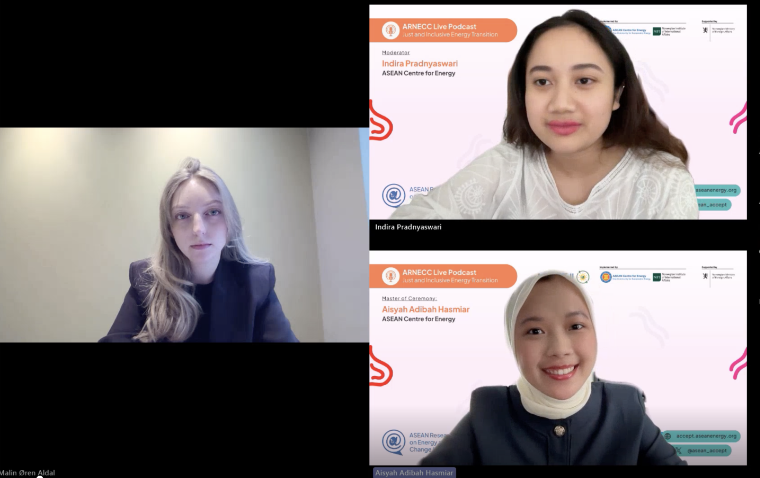
Photo 2. (Left to right) Ms. Malin Øren Aldal, Advisor the Norwegian Institute of International Affairs (NUPI), Ms. Indira Pradnyaswari, Research Analyst of ACCEPT and Aisyah Adibah Hasmiar, Research Assistant of ACCEPT II.
The talk was led by Ms. Aisyah Adibah Hasmiar, Research Assistant for ACCEPT II as Master of Ceremony, and moderated by Ms. Indira Pradnyaswari, Research Analyst of ACCEPT.
In the beginning of the discussion, Ms. Malin shared the importance of addressing the issue of delays in NDC submissions, noting that many State Parties failed to meet the deadlines established under the Paris Agreement. These delays should not necessarily be interpreted as a lack of commitment; rather, they reflect countries’ efforts to better align their NDCs with domestic political considerations and to enhance the credibility and feasibility of their climate commitments.

Photo 3. Ms. Malin Øren Aldal, Advisor the Norwegian Institute of International Affairs (NUPI)
Ms. Malin underscored four main clusters that resulted in delays in NDC submissions. The first two relate to capacity constraints, namely financial and institutional limitations. The second cluster involves technical challenges, such as the need for robust data systems, effective intergovernmental coordination, and the establishment of reliable monitoring mechanisms. The third cluster concerns domestic political dynamics, including electoral cycles, changes in governing coalitions, and growing political resistance to climate policies. Lastly, strategic considerations also play a role, as some countries may intentionally time their submissions to coincide with major international events, such as COP meetings or World Leaders Summits, to maximize political visibility and impact.
Furthermore, Ms. Malin explored several measures for state parties to improve the timeliness of NDC submissions. These include strengthening targeted capacity-building efforts, supported by both state and non-state actors, to address institutional, financial, and technical limitations that may hinder timely preparation. Another proposed approach is to separate headline mitigation targets from the more technical and detailed components of NDCs, allowing countries to submit their primary commitments on time while providing additional time to elaborate implementation strategies. Lastly, stronger climate leadership at the global level, along with accountability from policymakers and sustained pressure from civil society, could encourage countries to adhere more consistently to submission timelines.
Overall, the discussion provides in-depth research on the intersection between NDCs submission, the impacts of submission delays and ways for state parties to improve credibility on their respective climate commitments.
Closing the session, Ms. Indira emphasized the need for greater initiatives to encourage governments and policymakers to further strengthen regulatory frameworks, particularly in relation to monitoring systems, to ensure effective tracking of progress and compliance with climate commitments.
(AA & AD)
** Join our ASEAN Researchers Network on Climate Change (ARNECC) by registering yourself here. Become a part of our collaborative efforts to address pressing climate challenges and shape a sustainable future.
Detailed information on ACCEPT II can be found at https://accept.aseanenergy.org/
Follow our social media to stay updated on ASEAN’s energy-climate nexus and ACCEPT activities.