
Bangkok, 1 October 2025
On 1 October 2025, the ASEAN Centre for Energy (ACE) was invited to be one of the panellists in a regional panel discussion titled “After the First Global Stocktake: Fostering Southeast Asia’s Energy Transition Agenda toward the 1.5°C Target of the Paris Agreement.” The event, convened by the Institute for Essential Services Reform (IESR), brought together energy and climate experts from across the region to reflect on the implications of the First Global Stocktake (GST) and to identify how Southeast Asia can translate global commitments into actionable national and regional strategies and it was hosted in the Stockholm Environment Institute (SEI) Asia Center in Bangkok.
Representing ACCEPT II and ACE’s Energy Modelling and Policy Planning (MPP) Department, Muhammad Rizki Kresnawan, Senior Research Analyst of ACCEPT II, participated in the panel and shared insights drawn from ACE’s regional modelling work. He highlighted key energy transition trends across ASEAN and the growing interest in formulating long-term low-emission strategies.
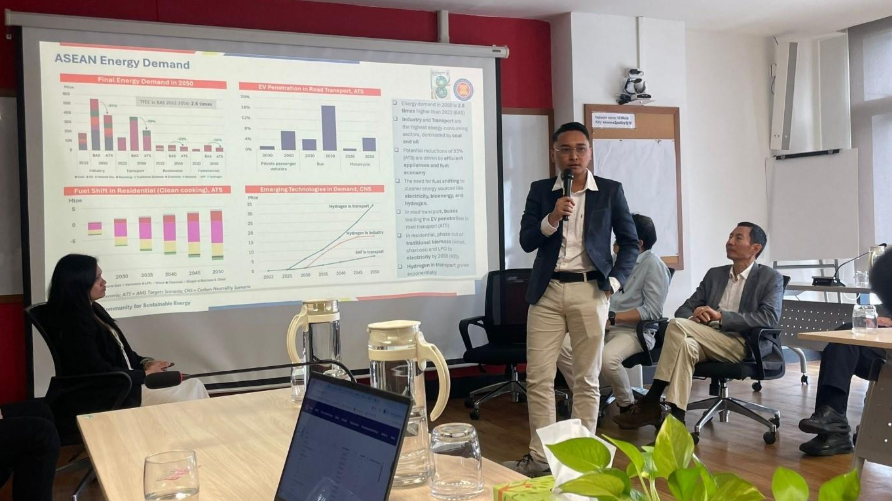
Photo 1. Muhammad Rizki Kresnawan, Senior Research Analyst of ACCEPT II, delivering a presentation during the session.
The session opened with remarks from Fabby Tumiwa, CEO of IESR, who underlined that the GST has made the urgency of system transformation unmistakable, especially for Southeast Asia—a region whose energy demand is projected to grow more than twofold by 2050. He emphasised that the global emissions gap and the inadequacy of current NDCs demand a sharper, more coordinated response across all sectors of society and government.
The panel discussion that followed explored the GST’s implications in depth, shifting from global context to regional collaboration and country-level experiences. Danica Marie Supnet from the Institute for Climate and Sustainable Cities (ICSC) opened the dialogue by explaining how the GST results reveal persistent gaps between ambition and implementation, especially in emerging economies, and she encouraged Southeast Asian countries to realign their energy and climate policies with 1.5°C-compatible pathways. Complimenting this point, Rizki noted that ASEAN’s projected rise in energy demand presents both a challenge and an opportunity: countries must meet development needs while accelerating emissions reduction efforts. Rizki also emphasised the importance of ASEAN platforms in harmonising national strategies, enabling policy exchange, and facilitating regional power interconnection, which could significantly improve renewable energy integration across borders.
Further perspectives were provided by Dr. Chalie Charoenlarpnopparut from SDG Move, who reflected on technological solutions and Thailand’s ongoing efforts to expand renewable energy deployment. He stressed that innovation must be supported by consistent policy signals and coordinated regulatory frameworks. Natharoun Ngo Son of EnergyLab Asia highlighted the economic dimensions of the transition, drawing lessons from Cambodia and Lao PDR to illustrate how just transition principles, community readiness, and investment accessibility shape the success of national energy pathways. Meanwhile, Huiyong Zhang from Energy Foundation China discussed the critical role of financing and international partnerships, pointing to the opportunities for China–Southeast Asia cooperation in areas such as grid infrastructure, capacity building, and technology transfer.
Photo 2. Panel discussion
The dialogue continued in an extended Q&A session, where participants and panellists exchanged reflections on coal phase-down strategies, renewable energy integration, climate resilience, and the structural reforms needed to accelerate transition efforts. Throughout the discussion, ACE’s regional lens remained central, reinforcing how coordinated modelling, shared data, and cross-border planning can support more credible and ambitious energy transition pathways across ASEAN. By the end of the session, the moderator underscored that the GST provides not only a warning but also a roadmap, and that Southeast Asia’s response will hinge on the region’s ability to strengthen cooperation, align policies, and translate global direction into concrete national measures. The event ultimately strengthened regional dialogue ahead of COP30 and reaffirmed the need for collective action if Southeast Asia is to remain within reach of the Paris Agreement’s 1.5°C objective.
(MRK)
** Join our ASEAN Researchers Network on Climate Change (ARNECC) by registering yourself here. Become a part of our collaborative efforts to address pressing climate challenges and shape a sustainable future. Detailed information on ACCEPT II can be found at https://accept.aseanenergy.org/ Follow our social media to stay updated on ASEAN’s energy-climate nexus and ACCEPT activities.