
Vientiane, 12 March 2026
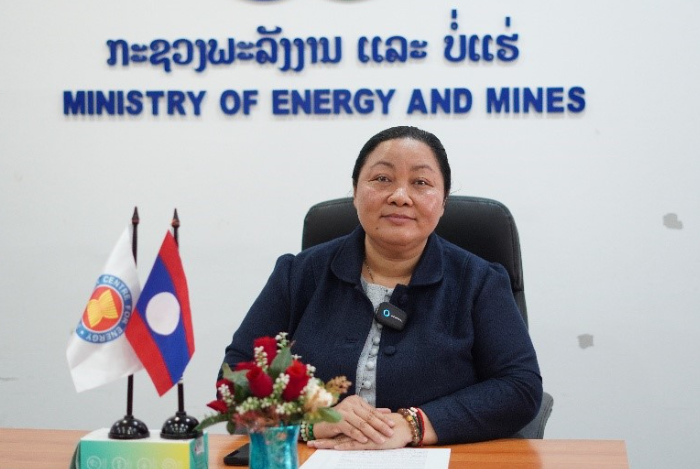
Photo 1. Dr Santisouk Phimphachanh, Senior Official on Energy (SOE) Leader and Deputy Director General, Ministry of Energy and Mines (MEM) of Lao PDR
Vientiane, 12 March 2025 – As part of our International Women’s Day 2025 celebration, the ASEAN Centre for Energy (ACE) had the pleasant opportunity to visit the Ministry of Energy and Mines (MEM) of Lao PDR. Supported by the ASEAN Climate Change and Energy Project (ACCEPT) and the World Bank, ACE was honoured to meet Dr Santisouk Phimphachanh, Senior Official on Energy (SOE) Leader and Deputy Director General of Energy Policy at MEM Lao PDR, for an exclusive in-depth interview held on 12 March 2025 in Vientiane, Lao PDR.
This activity is part of the #ACEcelerateAction campaign, an initiative that aims to amplify the voices of women, recognise women’s contributions, and advocate for gender-inclusivity in ASEAN’s energy sector. Led by the ASEAN Climate Change and Energy Project (ACCEPT), the campaign is part of the acknowledgement that women still face many obstacles in the sector, especially when it comes to representation. Women only make up 20% of the global energy workforce and an even lower 8% in the ASEAN region. Therefore, it is important to put more effort in establishing a more gender-inclusive energy sector in ASEAN, which includes having women occupy not only research or technical roles, but also leadership and decision-making roles.
To introduce, Dr Santisouk has extensive educational background and experiences in the energy sector, obtained her Master’s degree of Electrical and Information Engineering at King Mongkut’s Technology of University, Thailand. She continued her studies to Doctoral degree, majoring in Engineering on Electric Power System Management at the Asian Institute of Technology in Thailand. After finishing her education, she joined the Department of Electricity of MEM in 2010, served as Director of the Power System Planning Division Department of Energy Policy and Planning from 2012 to 2020, and transitioned to Deputy Director General of Department of Energy Policy and Planning from July 2020 and onwards.
In her 22-year-long career, Dr Santisouk has witnessed the evolving energy landscape and the growing support for women in the sector, especially in the workplace. Reflecting on her experience at MEM Lao PDR, as a woman navigating the male-dominated industry, she shares and highlights the importance of providing the necessary support and opportunities to help women thrive in the workforce.
Representing the project during the interview were Indira Pradnyaswari, Research Analyst of ACCEPT II, and Amara Zahra Djamil, Junior Communications Officer of ACCEPT II. The interview was conducted in the Department of Energy Policy and Planning Office of MEM Lao PDR in Vientiane. The in-depth interview aims to encourage more women to participate in the energy sector, improve the leadership skill, and show the equal opportunities that existed in the workplace. During the interview, intriguing questions were asked to explore the efforts of Lao PDR’s energy sector in enhancing gender equality.
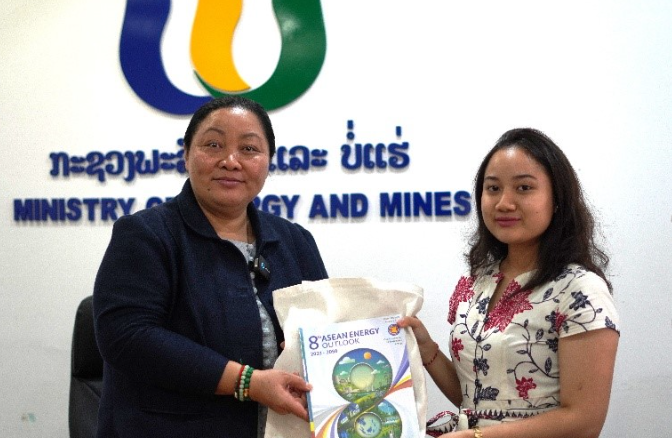
Photo 2. Dr Santisouk Phimphachanh and Indira Pradnyaswari, Research Analyst of ACCEPT II, with the 8th ASEAN Energy Outlook (AEO8).
Throughout your career, how have you witnessed the landscape change regarding inclusivity and diversity, particularly concerning gender representation?
Dr Santisouk: “We (MEM Lao PDR) have been developing a lot of support for more women (in the energy sector). Because the Lao Government has policies supporting and giving priority to the women. Our ministry has an organisation called the Women Union, which works on supporting women in the ministry. They provide support for activities such as sports, donation, or development in the energy sector. We encourage more women to participate in this (energy) work. Because the women in MEM are not only engineers. We also have administration, corporation, or IT work.”
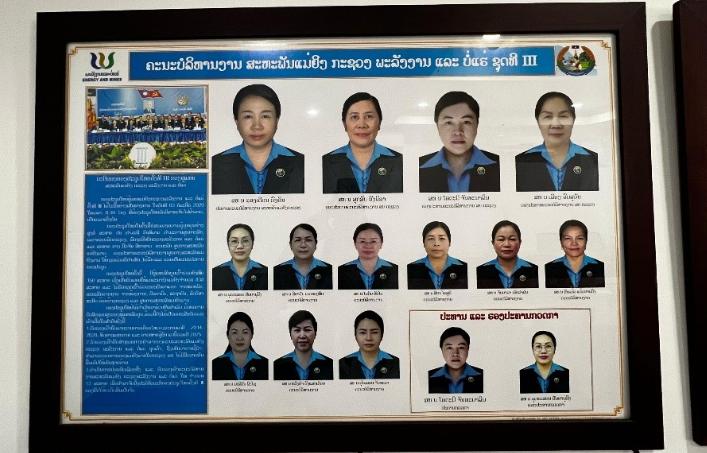
Photo 3. The Lao Women Union at the Ministry of Energy and Mines of Lao PDR.
What are the biggest challenges and opportunities that you have faced and how have you navigated it?
Dr Santisouk: “Some women, they come with different (skills). They just work in the office. Sometime when they go overseas, they face problems like communication or something. That’s why in our ministry, we try to encourage women to get support or study English, to improve their knowledge and skills, and prepare for presentations.”
ASEAN recognises the importance of gender equality, emphasising on active participation and integration of women in the region. From your perspective, what steps can organisations and institutions take to create a more inclusive and supportive workplace?
Dr Santisouk: “According to our government policy to support women, our organisation also has plans to improve the working space, and how to give them more opportunities such as for studies. As I mentioned before, we’re talking about improving knowledge skills from the field of study. This is important. Because when they occupy a level or position, they need to have confidence and make sure that they can make decisions on them, and how to move forward to implement plans, how to evaluate and monitor the project. This is what we are trying to improve. And moreover, they (women) can go apply for Master’s (degree) or PhD as they now can do so. This is what our ministry encourages them to do.”
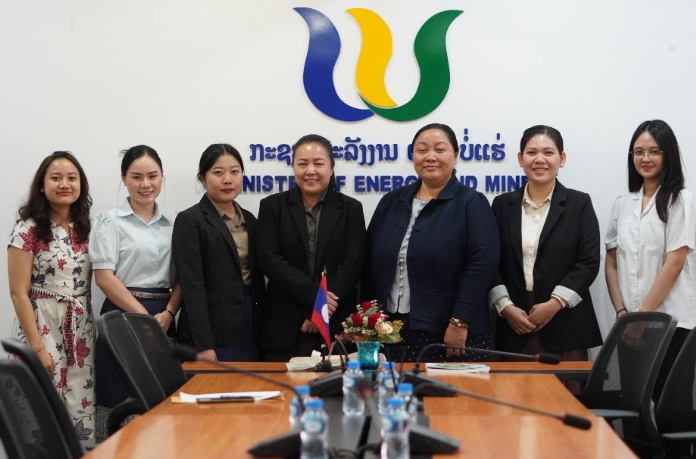
Photo 4. ACCEPT team with women staff at MEM Lao PDR.
Looking ahead, what do you envision for the future of gender equality and inclusivity within the energy sector?
Santisouk: “We try to promote gender equality by providing more chances for women to participate and compete for positions. We believe that women should be given the chance to demonstrate their capabilities and contribute meaningfully to their roles. This includes studying overseas. I hope that in the near future, with support, we can encourage more women to participate and enroll into various programmes and activities.”
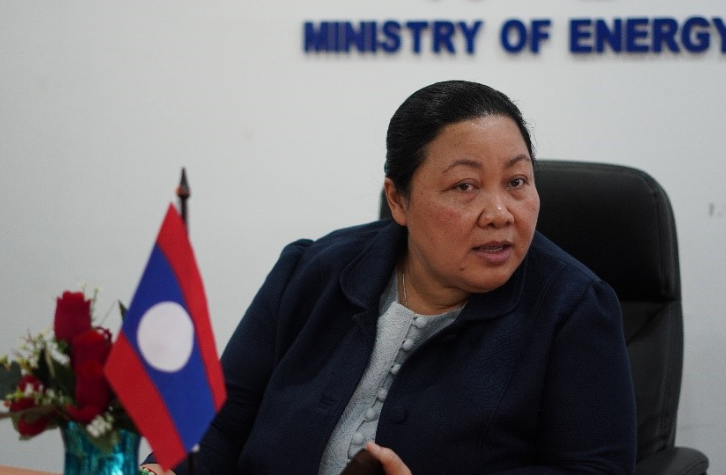
Photo 5. Dr Santisouk during the interview.
As a woman leader herself, Dr Santisouk encourages other women to pursue careers in the energy sector. While having the motivation is one step forward, she also notes the importance of taking action to grow and obtain the necessary skills to succeed in the sector, such as through obtaining higher education. Moving forward, Dr Santisouk hopes that there will be more women to support ASEAN’s energy sector.
ACE will also continue to advocate gender mainstreaming in ASEAN’s energy-climate nexus in various initiatives with partners, such as Norway through ACCEPT and the World Bank. This includes promoting equal access to opportunities, amplifying the voices of women across levels, and encouraging women to take part in ASEAN’s net zero journey. By ensuring that women are equally represented and empowered, ASEAN can build a more inclusive, innovative, and resilient energy future.
Watch the full in-depth interview here.
Disclaimer: The transcripts of this interview have been condensed and edited for clarity and readability.
(AZD)
** Join our ASEAN Researchers Network on Climate Change (ARNECC) by registering yourself here. Become a part of our collaborative efforts to address pressing climate challenges and shape a sustainable future.
Detailed information on ACCEPT II can be found at https://accept.aseanenergy.org/
Follow our social media to stay updated on ASEAN’s energy-climate nexus and ACCEPT activities.