Sharing ASEAN’s Energy Perspectives on Climate Justice and Pathway for a Just and Inclusive Energy Transition at ASEAN Youth Sustainability Forum 2026

Hanoi, Viet Nam, 29-31 October 2026
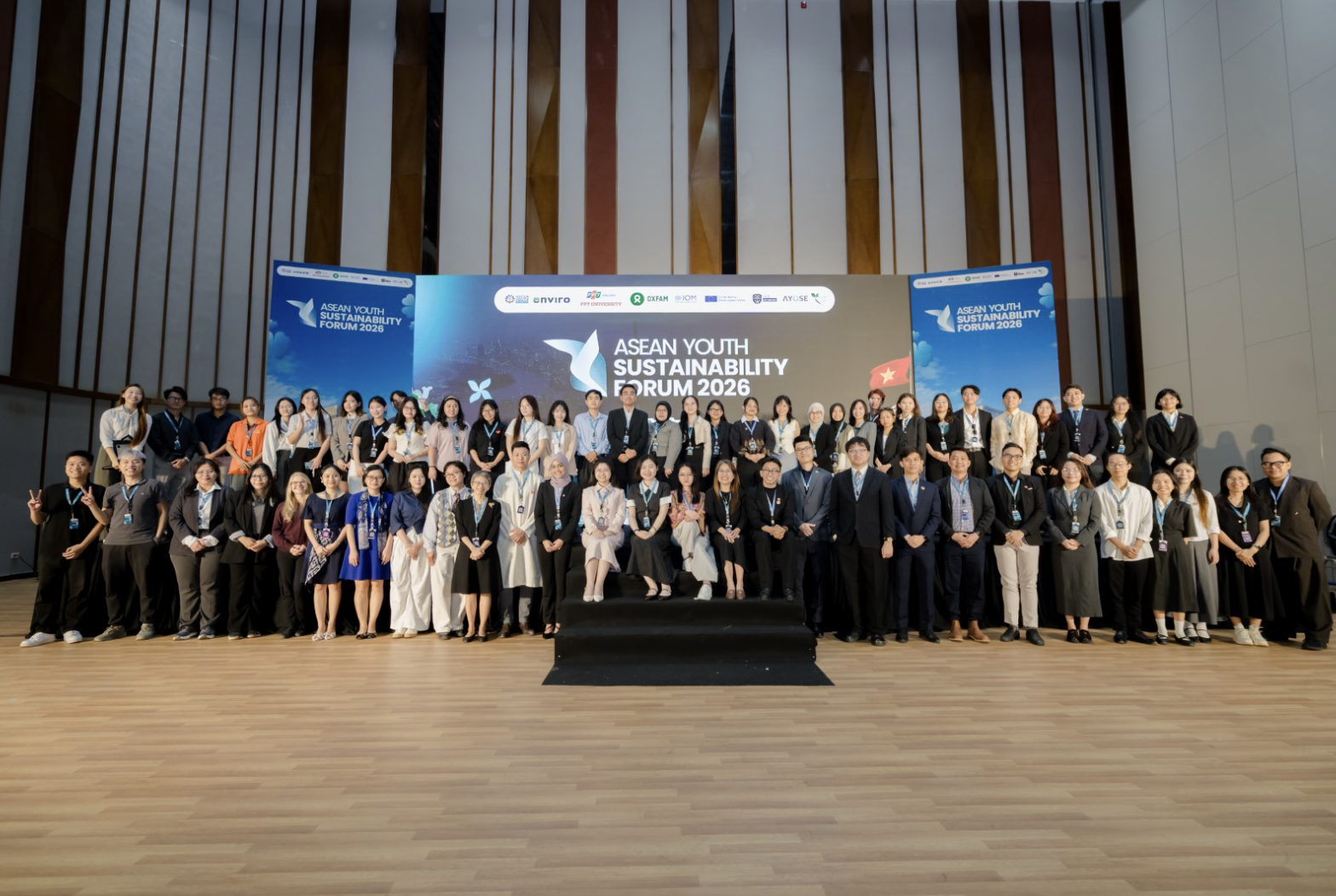
Photo 1. Group photo of participants attending the ASEAN Youth Sustainability Forum 2026.
Hanoi, Viet Nam, 29-31 October 2026 – The ASEAN Centre for Energy (ACE), through the ASEAN Climate Change and Energy Project Phase II (ACCEPT II), took part in the ASEAN Youth Sustainability Forum (AYSF) 2026, a three-day regional youth platform held in Hanoi, Viet Nam under the theme “Climate Justice: Bridging Inequality and Advancing Inclusive Climate Actions”. Ms Indira Pradnyaswari, Research Analyst of ACCEPT II contributed on two days of the Forum: as a speaker at Panel Discussion 1 on Climate Justice on Day 1, and as the third workshop speaker in the Workshop and Policy Making session on Day 3.
AYSF 2026 is the flagship programme of AYO Enviro, the environment-focused affiliate of the ASEAN Youth Organization (AYO), co-organised with FPT University and supported by Oxfam and the International Organization for Migration (IOM) Indonesia. With youth aged 18 to 35 as its primary focus, the forum brings together young leaders, practitioners, and stakeholders through capacity-building workshops, expert-led discussions, and collaborative group engagement, with the aim of deepening understanding of climate justice, building regional networks, and equipping delegates to design localised sustainability solutions. Its programme is organised around three sub-themes: frontline communities and the hidden human cost of climate change, a just energy transition that powers a fairer future for people and planet, and climate education and youth participation in climate decision-making and policy justice.
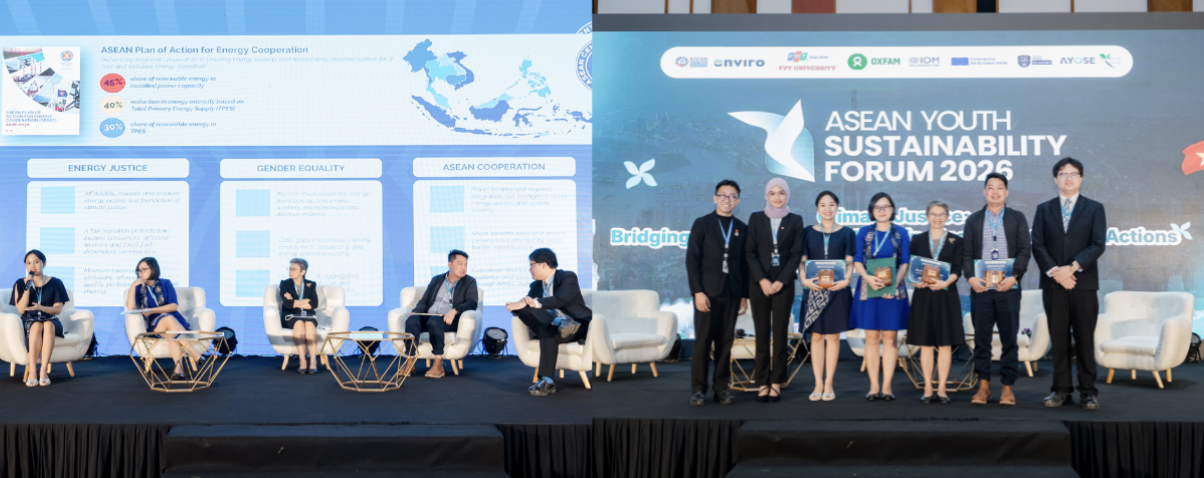
Photo 2 and 3. Ms Indira Pradyaswari, Research Analyst of MPP at ACE participating in Day 1 panel discussion (left) and panellists of the panel discussion (right).
Day 1 began at FPT University with an opening ceremony featuring remarks from AYO Enviro, Oxfam, FPT University, and YNet Vietnam, before delegates moved into Panel Discussion 1, “Climate Justice: Bridging Inequality to Inclusive Climate Action”. The panel examined how climate change disproportionately affects vulnerable communities and what strategies can advance equitable, inclusive, and people-centred climate policy. Alongside Ms Indira, the speakers were H.E. Phasporn Sangasubana, Executive Director of the ASEAN Centre for Sustainable Development Studies and Dialogue (ACSDSD), Ms Ngan Nguyen Hoang, Coordinator for the Regional Climate and Energy Project in Asia at Friedrich Ebert Stiftung (FES) Vietnam, and Mr Ratha Ra, Projects Coordinator for Just Energy Transition and Climate Resilience at Oxfam in Cambodia.
Ms Indira presented a regional energy sector perspective on the just and inclusive energy transition. She began with the vision of the ASEAN Plan of Action for Energy Cooperation (APAEC) 2026–2030, which commits the region to advancing cooperation in ensuring energy security and accelerating decarbonisation for a just and inclusive energy transition, and recalled its regional targets: a 45% share of renewable energy in installed power capacity, a 40% reduction in energy intensity, and a 30% share of renewable energy in total primary energy supply.
Ms Indira then framed climate justice in the energy sector around three themes. On energy justice, she highlighted that affordable, reliable, and modern energy access is a foundation of climate justice, that a fair transition protects low-income consumers, affected workers, and fossil fuel-dependent communities, and that success should be measured beyond emissions to include affordability, job quality, participation, and benefit sharing. On gender equality, she emphasised that women must shape the energy transition as consumers, workers, entrepreneurs, and decision makers, which requires closing gaps in technical training, employment, leadership, and energy entrepreneurship, and using gender-disaggregated indicators to design and evaluate inclusive policies. On ASEAN cooperation, she noted that power trading and regional integration can strengthen clean energy access and system security, provided that benefits are shared fairly and communities affected by cross-border infrastructure are protected, with finance, skills, resilience, and social safeguards coordinated through APAEC 2026–2030.
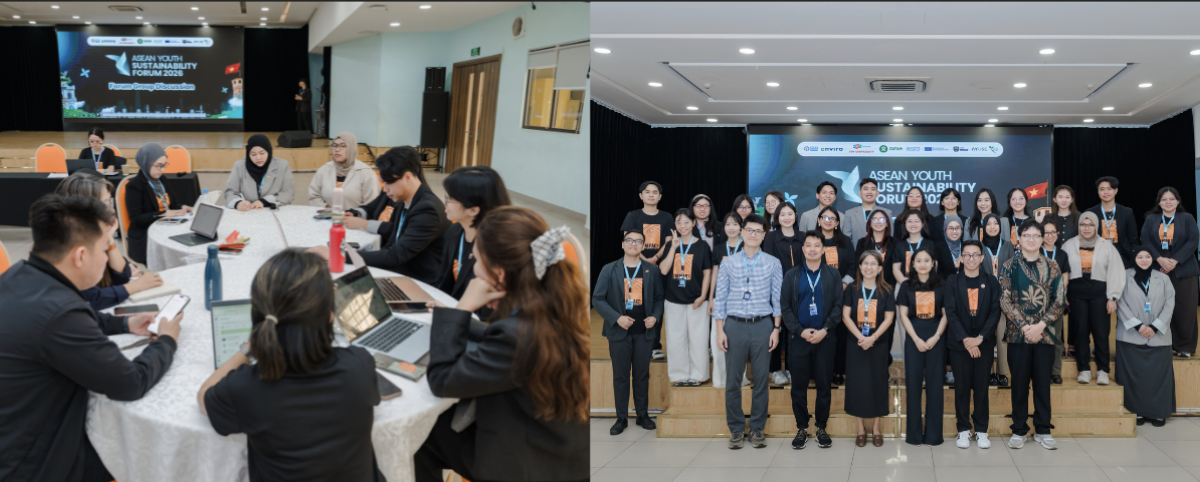
Photo 4 and 5. Participants engaged with the workshop on Day 3 (left) and group photo of participants attending the workshop (right).
Day 3 turned from dialogue to action. The day was designed for delegates to formulate policy recommendations as the AYSF 2026 outcome document, aligned with the ASEAN Declaration on the Empowerment of Youth in Climate Action and Disaster Resilience and with Outcome 4 of the ASEAN Work Plan on Youth 2026–2030 on youth climate action, biodiversity conservation, and disaster resilience.
Starting with introducing ACE as an intergovernmental organisation that advances ASEAN energy cooperation as a catalyst, knowledge hub, and think tank, Ms Indira continued by introducing the 9th ASEAN Energy Outlook (AEO9) and how it extends ACE’s long-term projections of energy demand and supply to the broader regional socioeconomic implications of the transition, including employment. Ms Indira reminded delegates of the three scenarios examined: the Baseline Scenario (BAS), the AMS Target Scenario (ATS), and the ASEAN Coordinated Transition Scenario (ACTS). Raising the issue of the workforce gap in ASEAN’s energy transition, her presentation highlighted a central question on what happens to the people whose jobs and livelihoods depend on the energy system the region is trying to change. A just transition is not only about protecting workers whose jobs may disappear but also about preparing young people for jobs that do not yet exist.
Drawing on Chapter 4.4 of AEO9 on “Labour and a Just and Inclusive Energy Transition”, Ms Indira showed that clean-energy employment growth does not automatically ensure a just transition: AEO9 projects approximately 620,000 additional clean power operational jobs, but a net loss of 1.91 million jobs across six tracked energy-related employment categories under the ACTS relative to the BAS in 2060. Opportunities and losses are separated by geography, timing, and skills, which call for targeted workforce and regional development strategies. Because the transition is technology-specific, it creates demand for different combinations of engineers, technicians, construction workers, electricians, and operations and maintenance (O&M) personnel at different points in time rather than a generic category of green jobs. Under the BAS, annual job availability rises from about 4.71 million in 2030 to 10.73 million in 2060, an increase of about 128%, with the largest opportunity in broad industrial employment. But Viet Nam, Indonesia, and the Philippines account for about 70% of ASEAN job availability in 2030, suggesting that countries with smaller projected job volumes may need regional skills partnerships, labour mobility arrangements, and investment support. Ms Indira also described a “construction cliff” as under the ACTS, renewable energy construction jobs peak at about 309,730 in 2040 and fall to 63,238 by 2050 as major grid builds are completed, while O&M jobs expand steadily but require very different skills, such as system diagnostics, SCADA monitoring, and preventative electrical maintenance.
To respond, Ms Indira set out policy implications for ASEAN across six priority areas: workforce readiness, regional cooperation, local economic development, decent employment, inclusive governance, and evidence-based monitoring. For each, she paired the AEO9 recommendation with the role ACE can play and the role young people can take on, from developing future-ready technical and policy skills through education, training, internships, and certification, to joining regional youth exchanges and research networks, promoting local innovation and green entrepreneurship, advocating for fair wages, safe working conditions, and social protection, taking part in youth dialogues and consultations, and contributing to research and monitoring of the social impacts of the transition. She also placed the discussion within ASEAN’s growing green jobs agenda, from the 2018 ASEAN Declaration on Promoting Green Jobs for Equity and Inclusive Growth and the 2020 establishment of the ASEAN TVET Council, to the 2025 Joint Statement from the ASEAN Labour Ministers Meeting on an actionable plan for green jobs, with a framework and action plan for a just and inclusive transition to green jobs and an ASEAN Green Jobs Centre of Excellence as next steps. While several Member States have developed clean energy and green jobs agendas, with the Philippines’ Green Jobs Act of 2016 and Singapore’s SkillsFuture cited as good practices, some still face gaps in regulating and implementing social protection and occupational safety and health related to climate change.
Across both days, the message to ASEAN’s young climate leaders was consistent: a just and inclusive energy transition will be decided not only by how much clean energy the region builds, but by who can access it, who works in it, and who has a voice in shaping it. As the region moves forward with its energy transition, the way forward lies in matching skills with the jobs the transition creates, sharing opportunities across countries and communities, and making space for youth as co-creators of energy and climate policy rather than only participants.
** Join our ASEAN Researchers Network on Climate Change (ARNECC) by registering yourself here. Become a part of our collaborative efforts to address pressing climate challenges and shape a sustainable future.
Detailed information on ACCEPT II can be found at https://accept.aseanenergy.org/
Follow our social media to stay updated on ASEAN’s energy-climate nexus and ACCEPT activities.