
Jakarta, 28 August 2026
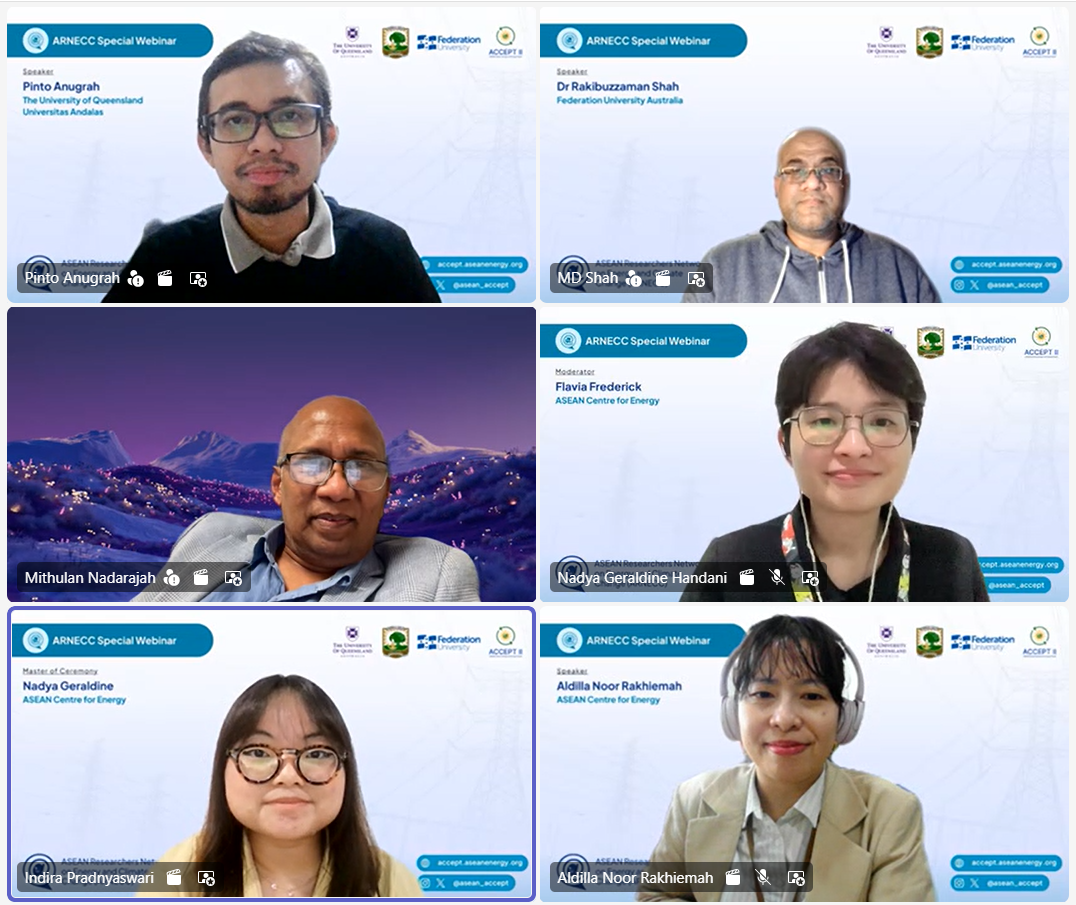
Photo 1. (left to right) Mr. Pinto Anugrah from The University of Queensland, Dr. Rakibuzzaman Shah from Federation University Australia, Prof. Mithulan Nadarajah from The University of Queensland, Flavia Frederick, Research Associate at ACE, Nadya Geraldine Handani, Research Assistant of ACCEPT, and Aldilla Noor Rakhiemah, Project Manager of ACCEPT.
Jakarta, 13 August 2026 – The ASEAN Climate Change and Energy Project (ACCEPT), through the ASEAN Researchers Network on Energy and Climate Change (ARNECC), held its first Special Webinar of 2026, presenting new research on the optimal mix of renewable energy technologies for the Brunei Darussalam, Indonesia, Malaysia, Philippines (BIMP) subregion’s path to net zero. The webinar, organised in collaboration with The University of Queensland, Australia, centred on the recently published paper “Sustainable Energy Transition for BIMP Regional Power Grid with Technology Ranking and Optimal Mix,” which appeared in the journal Applied Energy in July 2026. The paper was developed through ACCEPT’s Call for Proposals, and the session brought together three of its authors: Mr. Pinto Anugrah from The University of Queensland, Dr. Rakibuzzaman Shah from Federation University Australia, and Prof. Mithulan Nadarajah from The University of Queensland.
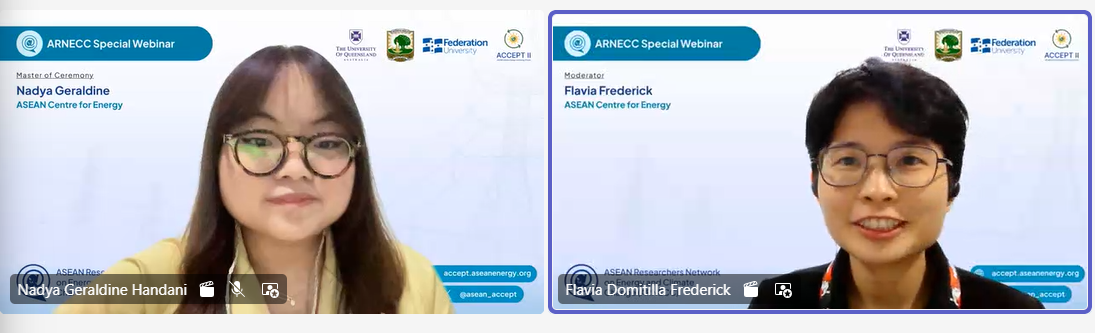
Photo 2. Nadya Geraldine Handani, Research Assistant for ACCEPT as Master of Ceremony (left) and Flavia Frederick, Research Associate at ACE as Moderator (right)
The special webinar was opened by Nadya Geraldine Handani, Research Assistant for ACCEPT. The paper presentation and the discussions that followed were moderated by Flavia Frederick, Research Associate at the Energy Modelling and Policy Planning (MPP) Department at ACE, who is also part of the modelling team developing the 9th ASEAN Energy Outlook (AEO9).
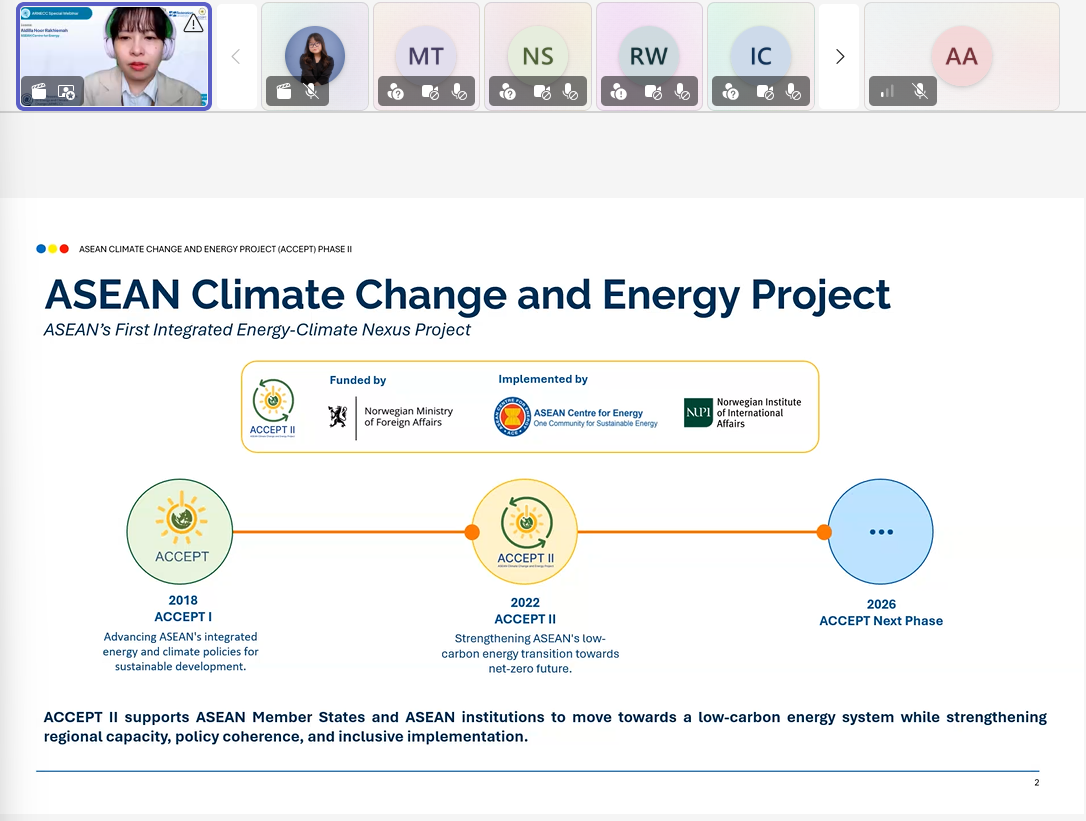
Photo 3. Welcoming remarks and presentation from Aldilla Noor Rakhiemah, Project Manager of ACCEPT.
To officially commence the webinar, the floor was handed to Aldilla Noor Rakhiemah, Project Manager of ACCEPT, to deliver the welcoming remarks and a broader introduction to the ACCEPT project. In her remarks, she thanked the researchers and attendees for joining, noting that the strong turnout reflected the growing interest in energy-climate nexus research across ASEAN. She introduced ACCEPT as the region’s first integrated energy-climate nexus project, funded by the Norwegian Ministry of Foreign Affairs and jointly implemented by ACE and the Norwegian Institute of International Affairs (NUPI). She explained that the project, now in its second phase since 2022, is driven by three strategic goals: advancing knowledge sharing, fostering a low-carbon economy, and enhancing regional structure. Highlighting ACCEPT’s tangible impact since March 2022, she detailed a strong track record of five policy dialogues, six regional workshops, and two study visits to Norway and Germany, alongside a massive digital footprint of nearly 37,000 publication downloads and over 340,000 website views.
She proceeded to introduce ARNECC, describing the network as an initiative under ACCEPT designed to build a connected research community across ASEAN Member States. This platform, she explained, fosters collaboration and knowledge-sharing on the energy-climate nexus while helping promising research reach a wider regional audience. Pointing to one of the network’s key achievements, she highlighted the ARNECC Call for Proposals, the very mechanism that supported the paper being presented that day. She recalled that the previous cycle drew 150 applicants, three of whom were selected and awarded scholarships to present their findings in Manila.
Concluding her remarks, she reaffirmed ACCEPT’s ongoing commitment to advancing the energy-climate-gender nexus through targeted publications, outreach across ASEAN Member States, and initiatives tied to International Women’s Day, ensuring that the region’s path to net zero remains as inclusive as it is ambitious.
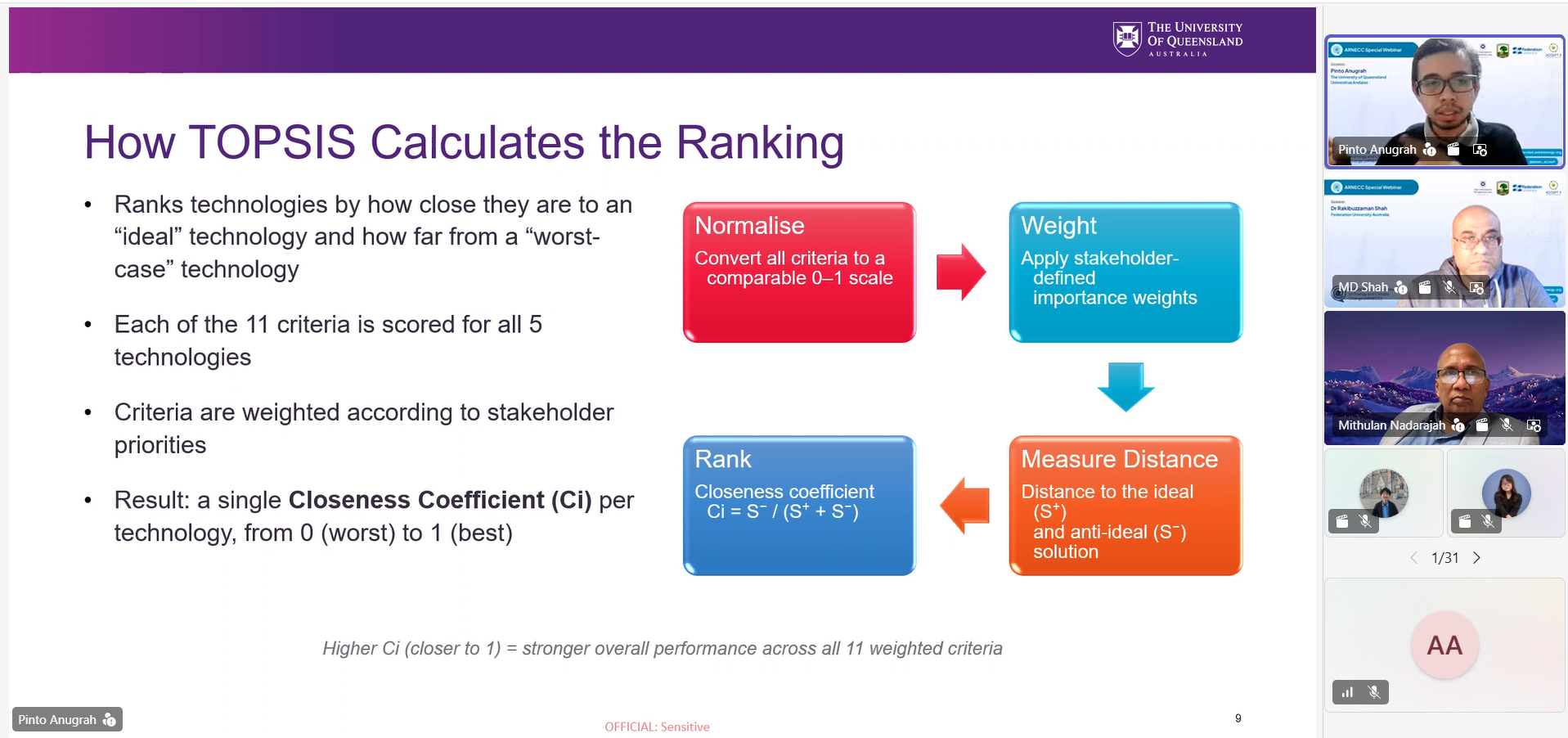
Photo 4. Panel discussion and presentation from Mr. Pinto Anugrah from The University of Queensland, Dr. Rakibuzzaman Shah from Federation University Australia, and Prof. Mithulan Nadarajah from The University of Queensland.
Transitioning into the main presentation, Ms. Flavia framed the discussion by setting out the paper’s scope, highlighting the need for a structured approach to renewable energy prioritisation before turning the floor to the three researchers. Prof. Nadarajah then opened by setting out the stakes for ASEAN’s energy future, noting that the region’s proximity to China and India, combined with sharply rising projected energy demand, makes the coming decades a pivotal period for the energy transition. While APAEC 2026-2030 has set clear renewable energy targets, he pointed out that ASEAN Member States remain far from uniform in their starting positions and that balancing existing coal capacity against substantial renewable potential looks very different from one country to the next. This unevenness, he explained, was the reason the research team chose to narrow its focus to the BIMP subregion, using Kalimantan as the proxy for Indonesia and Luzon for the Philippines, where sufficient cross-border data existed to support a rigorous comparative study.
He noted that regional power interconnection carries clear appeal, unlocking shared resources, lowering costs, accelerating decarbonisation, and helping maintain system stability as more variable renewable sources come online. But he was equally clear that interconnection is neither simple nor cheap: different countries bring different resource potentials and constraints to the table and are not competing on a level playing field. Deciding which renewable technologies to prioritise for deployment, he argued, cannot rely on cost considerations alone as a purely least-cost approach overlooks the complex environmental and social trade-offs that stakeholders must navigate.
Dr. Shah followed by laying out the study’s broader objective: to build an integrated system planning approach capable of testing multiple pathways toward net zero, drawing lessons from Australia’s own experience. The team constructed a series of scenarios, he explained, each weighted toward a different dominant renewable technology, such as hydro, solar, and others in turn, to observe how the system responds when one technology is pushed to the extreme. These scenarios then fed into a multi-criteria ranking exercise built around eleven criteria spanning four dimensions: technical, economic, environmental, and social, with social considerations centred mainly on job creation.
Mr. Anugrah then walked participants through the mechanics of the ranking method, known as TOPSIS. This method evaluates each technology based on how close it sits to an “ideal” performance profile and how far it sits from a “worst-case” one. First, all criteria are normalised onto a comparable scale and assigned stakeholder-defined importance weights. The method then measures each technology’s distance from both extremes. Finally, it converts this distance into a single Closeness Coefficient between zero and one, where values closer to one indicate stronger overall performance. Recognising that different stakeholders prioritise different criteria, the team did not settle on a single weighting scheme. Instead, they developed twelve distinct scenarios to see how the rankings held up under various assumptions. These scenarios were split across a base and priority set, individual-criteria tests, and extreme cases.
The results, Mr. Anugrah reported, showed solar photovoltaic technology ranking first in most scenarios, though its leadership proved conditional, strongest under non-economic priorities and weaker in a small number of purely cost-driven scenarios. Hydropower consistently placed second, distinguished less by any single strength than by how stable its ranking remained across nearly every weighting scenario tested. “Hydro stays competitive across the board,” he noted, calling it economically the strongest choice even where solar led on environmental grounds. Wind and geothermal settled in the middle of the pack, while biomass ranked lowest with striking consistency across almost all scenarios tested.
Beyond the technology rankings, the team modelled an optimal technology mix capable of taking the BIMP subregion to net zero. Across four stakeholder scenarios, they found the subregion would need an additional 76.8 to 85.0 gigawatts of capacity, backed by an estimated USD 146.2 billion to USD 151.0 billion in investment, to reach a 2050 generation target of 237.6 terawatt-hours. Importantly, no single technology exceeded 30 percent of deployment in any scenario, reinforcing the case that diversification, not reliance on any one resource, produces the most resilient pathway.
Translating these findings into policy terms, the team recommended a phased regional strategy. They advised starting with hydropower due to its highly stable performance across nearly every weighting scenario. Once financing and deployment capabilities mature, solar photovoltaic technology can be safely scaled up. To maximize efficiency, cross-border interconnection should be used so different areas can specialise in their strongest resources, like hydro in Sarawak and Sabah, or geothermal in Indonesia and the Philippines. Addressing the financial realities, they argued that the necessary scale of investment will demand new funding mechanisms, such as regional development banks and green bonds. Ultimately, they concluded that flexible policy frameworks, when paired with clear emissions targets, will easily outperform rigid technology mandates.
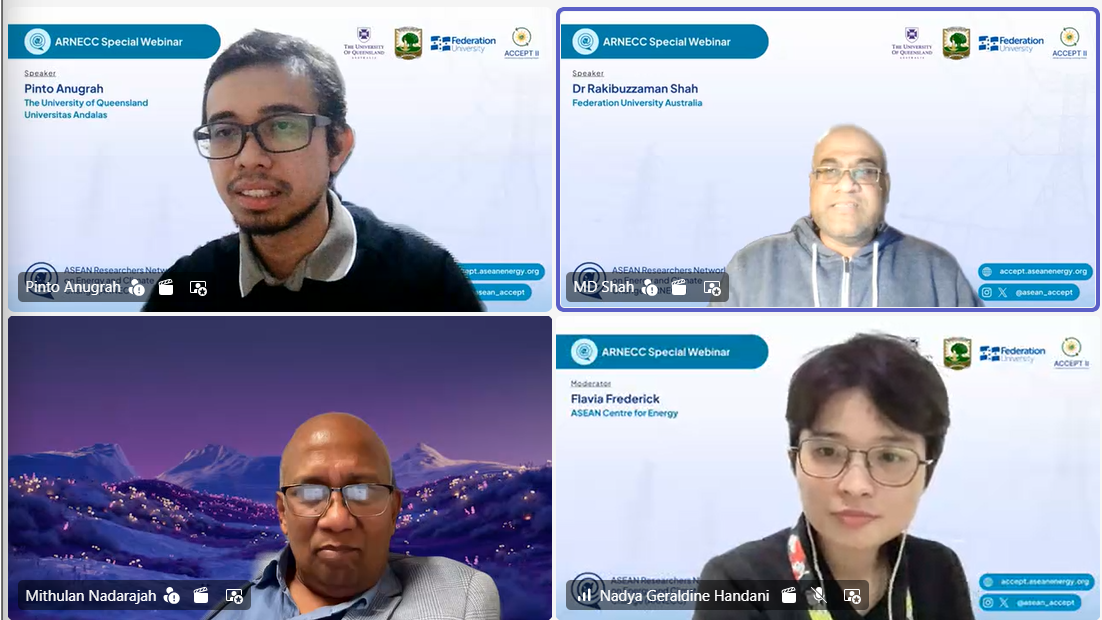
Photo 5. Question-and-answer session by the panelists and moderator.
The question-and-answer session, guided by Ms. Flavia, allowed ARNECC members to delve deeper into the study’s practical applications. Addressing the mechanics behind the research, the panel explained how their two analytical tools complement one another. They noted that while LEAP generates essential capacity and investment data, it cannot independently account for qualitative factors such as land use or job creation; a gap seamlessly filled by the TOPSIS multi-criteria analysis. When participants inquired if this framework could be applied to the broader ASEAN Power Grid, the researchers confirmed its transferability, though they emphasized that data availability remains the primary bottleneck. The BIMP subregion was chosen precisely because it offered the robust cross-border data required, and the team welcomed future collaborations to extend the analysis across the rest of ASEAN.
The conversation then shifted to the practical realities of deploying specific renewable technologies. Unpacking the model’s results, the panel clarified why biomass consistently ranked lowest, pointing to the immense difficulty of maintaining a large, sustainable supply chain, coupled with a life-cycle emissions profile that still relies on combustion. Conversely, they explained that solar-dominated scenarios require up to six times more capacity due to solar’s lower conversion efficiency (around 15 to 20 percent) and its reliance on daylight hours. To balance this, hydropower’s value as a dispatchable storage resource becomes critical. The model, they stressed, does not pit solar against hydro, but rather combines them alongside other technologies to achieve regional targets at the lowest overall investment. Similarly, while geothermal energy offers the appeal of round-the-clock generation, the panel cautioned that its geological uncertainties and high upfront exploration costs often make utility-scale development an expensive gamble, drawing parallels to Australia’s own challenges.
Closing the session, the panel was asked to identify a single priority for the region’s energy future. They centered their answer on the absolute necessity of holistic, region-wide planning over fragmented, country-by-country approaches. Realising the full benefits of interconnection, they argued, requires national and regional studies working together. Highlighting demand-side flexibility as a vital area for future research, they concluded that arriving at a shared regional direction will ultimately require governments and diverse stakeholders to sit at the same table and negotiate competing priorities directly.
With the ASEAN Power Grid continuing to expand, the discussion left ARNECC members with a clear picture of what a net-zero BIMP subregion could look like. It is not a bet on any single renewable technology, but a carefully sequenced, diversified mix, anchored by hydropower’s stability and scaled up with solar as financing conditions allow. Ultimately, this mix must be knitted together through cross-border interconnection, allowing each part of the subregion to specialise in what it does best. The research offered both a template and an open invitation: one the panel hoped future collaborators with access to broader regional data would help extend across the rest of ASEAN.
** Join our ASEAN Researchers Network on Climate Change (ARNECC) by registering yourself here. Become a part of our collaborative efforts to address pressing climate challenges and shape a sustainable future.
Detailed information on ACCEPT II can be found at https://accept.aseanenergy.org/
Follow our social media to stay updated on ASEAN’s energy-climate nexus and ACCEPT activities.