
Wednesday, 6 May 2026
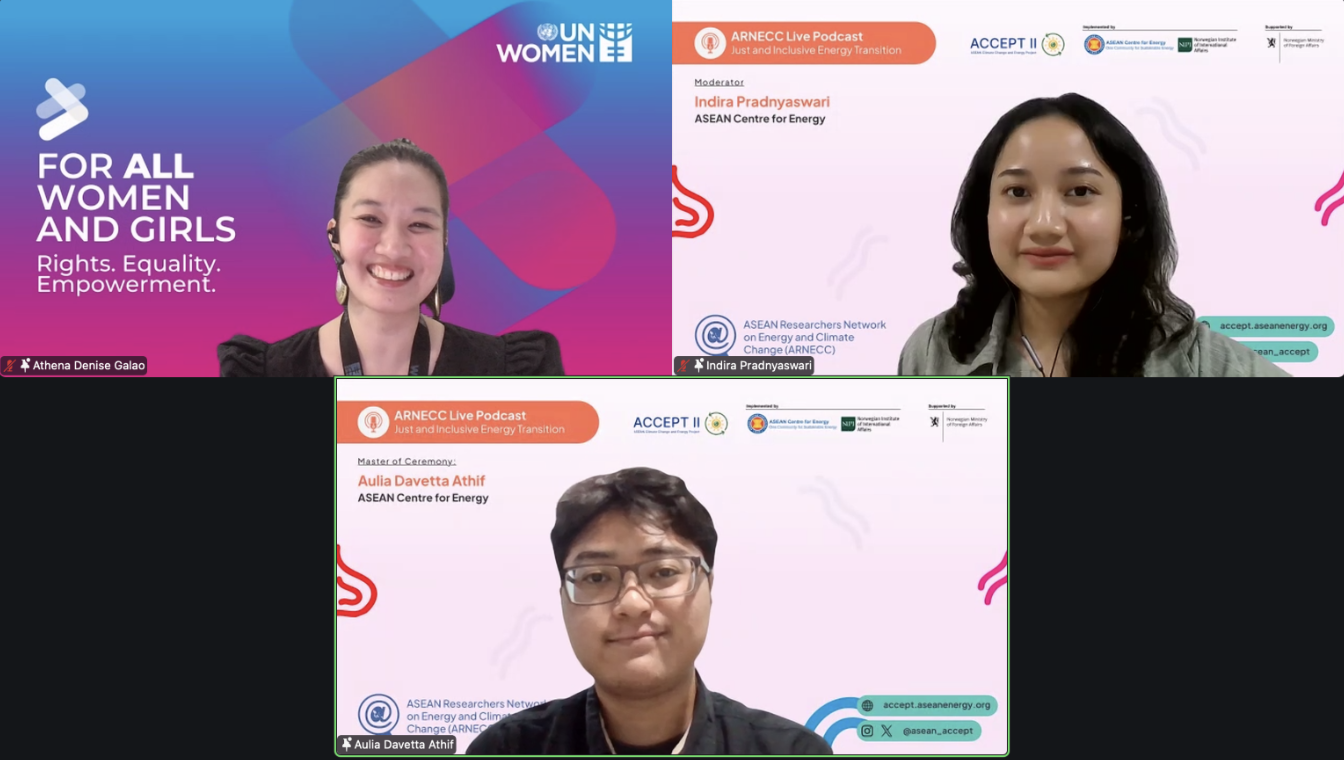
Photo 1. (left to right) Ms. Athena Denise Galao, Programme Coordinator for Gender and Climate Action at the UN Women Regional Office for Asia and the Pacific, Ms. Indira Pradnyaswari, Research Analyst of ACCEPT and Aulia Davetta Athif, Research Assistant for ACCEPT II.
Jakarta, 25 June 2026 – The ASEAN Climate Change and Energy Project (ACCEPT) through the ASEAN Researchers Network on Energy and Climate Change (ARNECC) held the second episode of ARNECC Live Podcast in 2026 on the series of Just and Inclusive Energy Transition (JIET). In the latest episode, on the topic of “Why Women Matter for a Just and Inclusive Energy Transition?” ACCEPT II invited Ms. Athena Denise Galao, Programme Coordinator for Gender and Climate Action at the UN Women Regional Office for Asia and the Pacific, to share insights and discuss the critical role women play in shaping a fair and inclusive energy transition across the ASEAN region.
The live podcast was opened by Aulia Davetta Athif, Research Assistant for ACCEPT II, and moderated by Ms. Indira Pradnyaswari, Research Analyst at ACCEPT.
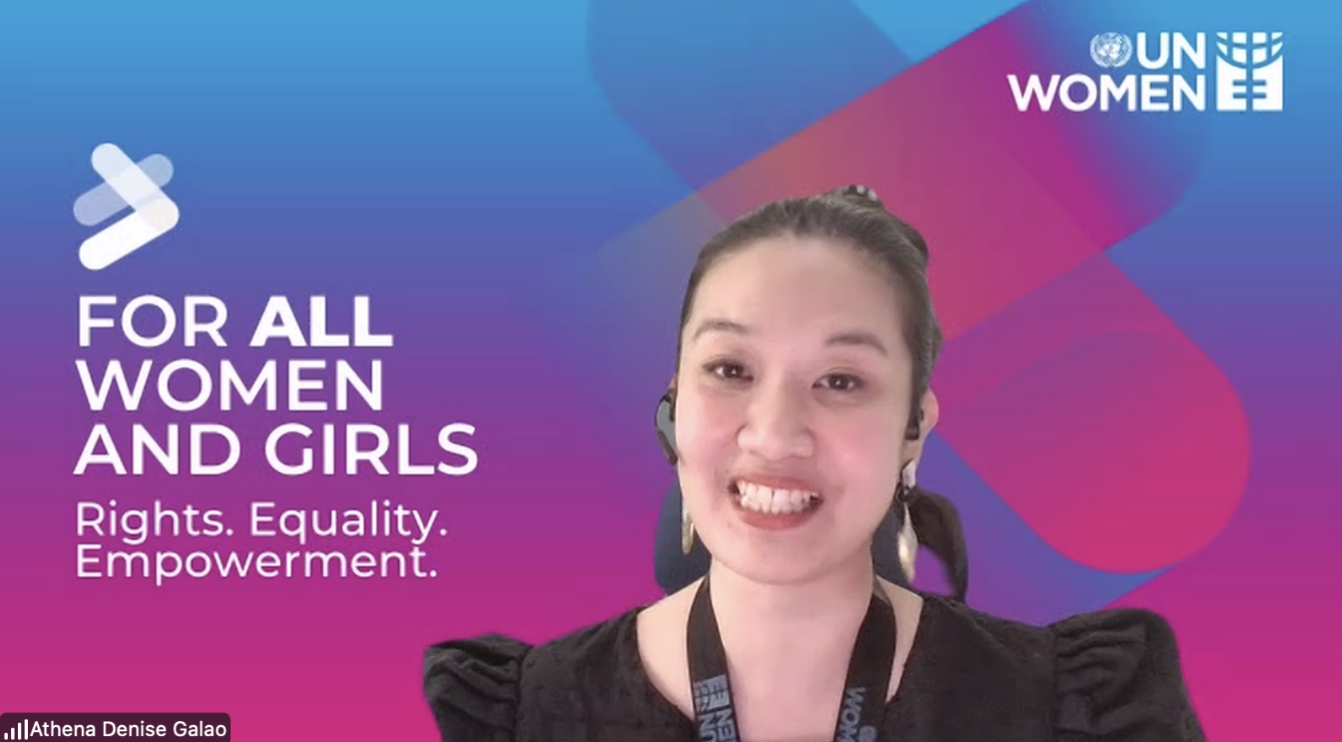
Photo 2. Ms. Athena Denise Galao shared her experience working in the intersection between climate and gender sector.
The live podcast was organised to explore and discuss why women’s leadership and participation are important to achieve a just and inclusive energy transition and acts as a realisation of one of the key objectives of APAEC 2026-2030 to advance inclusive energy development. Through insights from the EmPower programme, the discussion seeks to examine how women can contribute as decision-makers and shape gender-responsive energy policies in the energy sector while also inspire people to take greater action towards a more equitable and resilient energy sector.
The discussion begins with Ms. Athena sharing her grassroots experience in community-based adaptation programmes and highlighted how gender inclusion is a practical necessity in climate action where women’s meaningful participation requires deliberate effort at every stage. As an example, she noted that in rural communities often need time to build the confidence to actively participate in programme-facilitated discussions, making it essential to deliberately design participation processes that build space for women and dedicated peer-led spaces where they can engage meaningfully.
Continuing unto the topic of why we need to keep talking about women’s participation in the energy sector, Ms. Athena draws a parallel to the industrial revolution, when many working-class women entered factories as low-paid workers while continuing to shoulder unpaid care responsibilities at home. She emphasised that the energy transition presents an opportunity to learn from history by ensuring women are meaningfully included as leaders, innovators, and decision-maker. With the global economy heading toward a massive energy shift by 2040 to 2050, she argued that women must be active participants in decision-making, not just beneficiaries, particularly given evidence that women reinvest a larger percentage of their earnings into their communities compared to men. The energy transition, she concluded, is not only a technical opportunity but a chance to fundamentally reshape who holds power and drives development.
Ms. Athena also highlighted how impacts of climate change and energy security disproportionately affect women. Energy poverty directly amplifies the burden of unpaid care work that women already shoulder, and in the aftermath of climate related disasters, this burden intensifies further as women are expected to increase their caregiving duties while simultaneously reducing their own food intake as household resources grow scarce. Beyond immediate survival pressures, climate shocks also heighten the risk of gender-based violence, as economic stress from lost crops and damaged livelihoods creates household tensions that too often manifest as violence against women. Ms. Athena stressed that these are not isolated issues but deeply interconnected consequences of a system that has long excluded women from the decisions that shape their lives, making their inclusion in climate and energy conversations not just important, but urgent.
In light of the importance of women’s role in climate resilience, Ms. Athena shared her experience in her work leading the “EmPower: Women for Climate-Resilient Societies” programme, which seeks to advance gender equality and human rights within climate change and disaster risk efforts across Asia and the Pacific. EmPower operates across three areas: at the policy level, working with national and regional governments to generate data and sustain cross-ministerial engagement; in climate and energy financing, to create investment opportunities; and in capacity-building, equipping women with renewable energy skills to strengthen entrepreneurship.
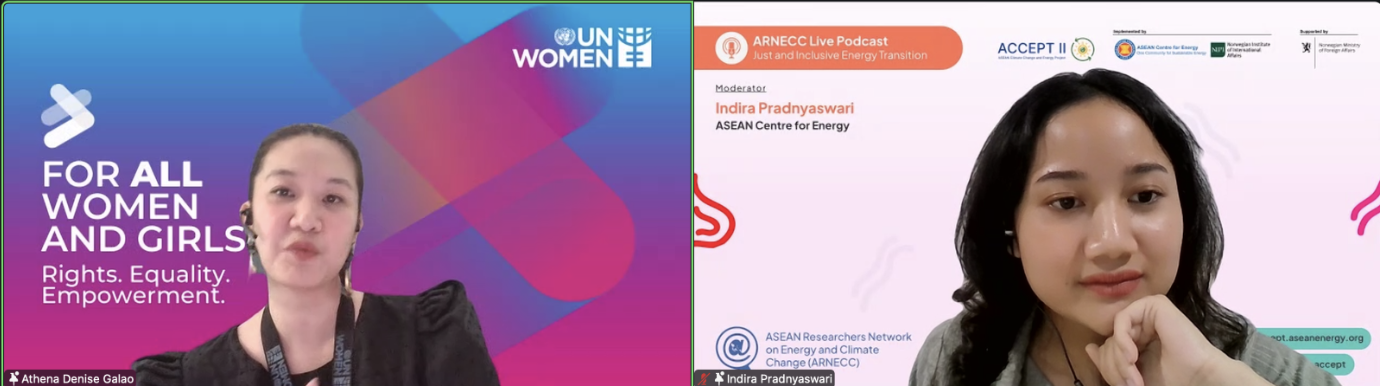
Photo 3. Ms. Athena Denise Galao and Ms. Indira Pradnyaswari engaged in a question-and-answer session.
The second half of the discussion focused on answering questions from the audience. The first question is on how to protect workers, particularly women, from job losses in brown industries during the energy transition. Ms. Athena outlined three key enablers: investing in gender-responsive policies that create an enabling environment, ensuring women occupy not just technical but leadership roles so they can influence institutional decision-making, and building capacity that accounts for the diversity of women across the region, including language barriers and geographic access. She noted that meaningful participation goes beyond counting women in the room, it also means tracking how often and how long they actively engage in negotiations.
It then continued to a question on common challenges on advancing women’s participation. Ms. Athena noted that the most challenging part is convincing governments that women must be at the table, and that bringing women into the conversation also means bringing the resources they need, particularly finance. She highlighted that getting women into energy adoption requires deliberate investment in upskilling, as the market model itself must be redesigned to include women as active participants, not just end beneficiaries.
There are also questions on unconscious bias towards women and how to create mechanisms that are adaptable to different sociocultural contexts while still ensuring meaningful gender inclusion. For the former, Ms. Athena called for gender audits within organisations to formalise and address biases embedded in HR policies and recruitment processes, alongside clear numerical targets for women’s representation at each stage. On the latter question, she noted that while successful initiatives can provide valuable lessons, their implementation should be carefully adapted to national political, economic, and cultural contexts. She added that ASEAN’s diversity offers a valuable foundation for mutual learning and innovation. Responding to a question on how young people can contribute to the energy transition, she encouraged them to seek out both peers and mentors within the energy sector who can serve as role models, foster a sense of community, and help build the confidence to make their voices heard.
As the session concluded, the way forward is clear; gender inclusion in the energy transition must move beyond representation toward meaningful leadership. Regional platforms like ASEAN have a critical role to play in mainstreaming gender considerations into energy policy, while ensuring that capacity-building, financing, and decision-making spaces are accessible to women across all contexts. With green jobs opening up on the horizon, the energy transition presents a generational opportunity to dismantle structural inequalities rather than replicate them, but only if women are empowered to drive the conversation.
** Join our ASEAN Researchers Network on Climate Change (ARNECC) by registering yourself here. Become a part of our collaborative efforts to address pressing climate challenges and shape a sustainable future.
Detailed information on ACCEPT II can be found at https://accept.aseanenergy.org/
Follow our social media to stay updated on ASEAN’s energy-climate nexus and ACCEPT activities.