
Thursday, 2 July 2026
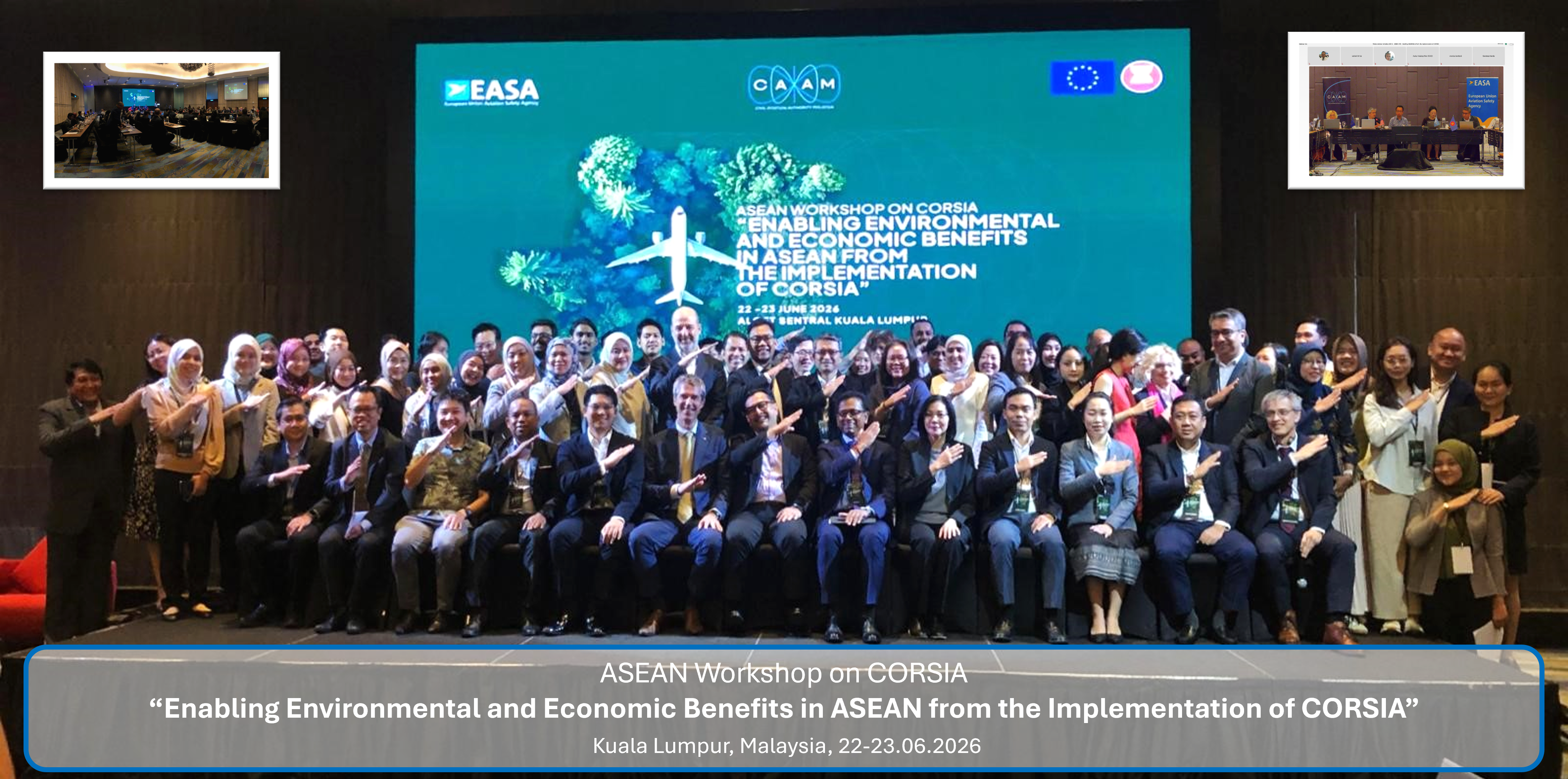
Kuala Lumpur, 22-23 June 2026 – Representatives from ASEAN Member States, aviation authorities, international organisations, and industry stakeholder gathered in Kuala Lumpur, Malaysia, for the ASEAN Workshop on CORSIA: Enabling Environmental and Economic Benefits in ASEAN from the Implementation of CORSIA. In this workshop, representatives from the ASEAN Climate Change and Energy Project (ACCEPT), Ms Aldilla Noor Rakhiemah, Project Manager of ACCEPT and Ms Indira Pradnyaswari, Research Analyst of ACCEPT participated in the discussions, exchanging views with regional stakeholders on the implementation of CORSIA and its implications for ASEAN. Organised by the European Union Aviation Safety Agency (EASA) in collaboration with the Civil Aviation Authority of Malaysia (CAAM), the two-day workshop served as a regional platform to strengthen understanding of the Carbon Offsetting and Reduction Scheme for International Aviation (CORSIA) while exploring opportunities for ASEAN to optimise both environmental and economic benefits from its implementation.
As the aviation sector continues to recover and expand, addressing its climate impact has become increasingly important. CORSIA, developed by the International Civil Aviation Organization (ICAO), represents the first global market-based mechanism designed to address carbon emissions from international aviation. Recognising the importance of aviation sector in regional connectivity and economic development, ASEAN is working to strengthen its readiness for CORSIA implementation while addressing the policy and institutional challenges.
The workshop provided participants with an overview of the international climate policy landscape and the relationship between CORSIA and global carbon market developments. Discussions highlighted the importance of aligning aviation decarbonisation efforts with broader climate objectives while ensuring environmental integrity and compliance with international standards, climate targets, and national priorities.
A key focus of the workshop was strengthening regional readiness for the first phase of CORSIA implementation. Experts and government representatives exchanged experiences on national processes to support compliance by aircraft operators, including emissions monitoring and reporting, carbon credit authorisation, and institutional coordination between aviation and environmental authorities. These discussions highlighted the importance of establishing clear governance frameworks to facilitate implementation while maintaining consistency with national climate policies.
Furthermore, the workshop also explored how the region can benefit from increasing demand for high-integrity carbon credits. Participants discussed the potential for ASEAN countries to attract climate finance through eligible carbon projects while identifying the enabling policies and institutional capacities required to support project development. Regional case studies further illustrated how national regulations and market mechanisms are evolving to accommodate international carbon market participation.
The programme also highlighted the importance of collaboration across governments, aviation stakeholders, carbon market experts, and the private sector. Through open discussions and knowledge sharing, participants exchanged perspectives on practical implementation challenges, opportunities for regional cooperation, and approaches to strengthening market readiness. This collaborative approach reflects ASEAN’s commitment to advancing collective solutions while recognising the diverse circumstances of individual Member States.
As the way forward, the workshop concluded with discussions on actions that could further enable ASEAN to realise the environmental and economic benefits of CORSIA. Participants highlighted the importance of enhancing technical capacity, strengthening institutional coordination, establishing regional standards, and promoting greater cooperation among ASEAN Member States to facilitate effective implementation. Discussions also underscored the need to ensure environmental integrity by preventing double counting of emissions reductions, particularly as countries advance their carbon market frameworks and international carbon credit transactions. Through these efforts, ASEAN can support the decarbonisation of international aviation while contributing to broader sustainable development and climate objectives.
(IP)
** Join our ASEAN Researchers Network on Climate Change (ARNECC) by registering yourself here. Become a part of our collaborative efforts to address pressing climate challenges and shape a sustainable future.
Detailed information on ACCEPT II can be found at https://accept.aseanenergy.org/
Follow our social media to stay updated on ASEAN’s energy-climate nexus and ACCEPT activities.