
Tuesday, 28 April 2026
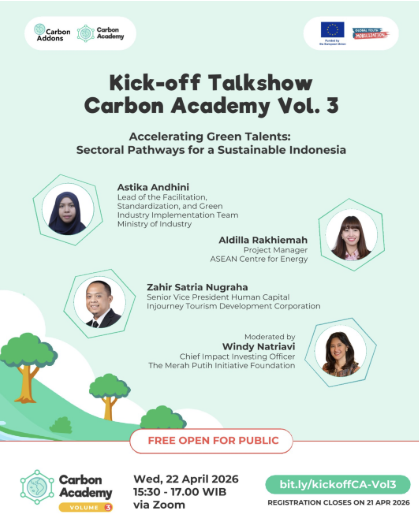
Photo 1. Talkshow Poster
In the spirit of Earth Day, the ASEAN Climate Change and Energy Project Phase II (ACCEPT II) participated in “Kick-off Talkshow Carbon Academy Vol. 3: Accelerating Green Talents”. Hosted by Carbon Addons and supported by the Youth Empowerment Fund, the session brought together industry leaders and policy experts to discuss green transition in different sectors and the talents needed in the upcoming future. The event brought together key speakers, including Ms. Aldilla Noor Rakhiemah, Project Manager of ACCEPT Phase II and Senior Officer of the Energy Modelling and Policy Planning Department at ACE, Ms. Astika Andhini, Lead of the Facilitation, Standardisation and Green Industry Implementation Team from Ministry of Industry, and Mr. Zahir Satria Nugraha, Senior Vice President of Human Capital of Injourney Tourism Development Corporation (ITDC).
Kicking off the session, Mr. Mohammad Naufal, founder and CEO of Carbon Addons delivered opening remarks, highlighting talent gap as a key challenge in advancing Indonesia’s green transition. Moderated by Ms. Windy Natriavi, Chief Impact Investing Officer of The Merah Putih Initiative Foundation, the session began with a presentation by Ms. Aldilla Noor Rakhiemah, who emphasized the challenges surrounding the development of a green workforce in Indonesia’s pursuit of carbon neutrality.
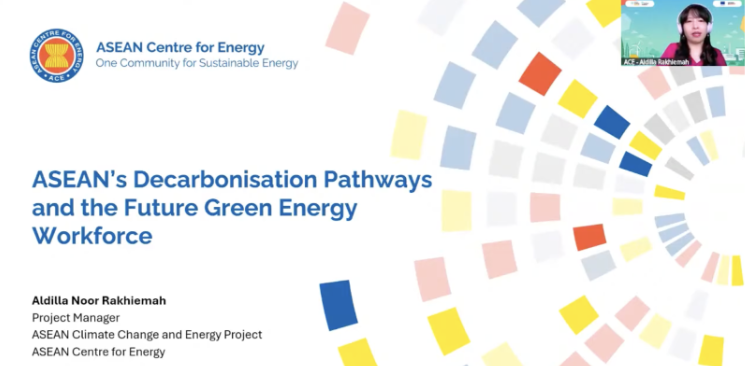
Photo 2. Presentation by Ms. Aldilla Noor Rakhiemah, Project Manager of ACCEPT II
Referring to the 8th ASEAN Energy Outlook, Ms. Aldilla noted that the outlook entails multiple scenarios, which does not only touch upon the technical considerations of energy demand and access, but also to include socio-economic dimensions. Among these, the carbon neutrality scenario is particularly relevant, addressing pathways to net-zero carbon emissions by 2050 by encompassing both energy and non-energy sources. In this context, Ms. Aldilla highlighted the implications for the energy workforce, noting a gradual shift from fossil fuel–based jobs toward renewable energy sectors. Despite this growth, a significant challenge that persists is a mismatch between existing energy education and the evolving demands of the renewable energy industry, as current curriculum remains largely oriented toward fossil fuels.
From the ministerial level, Ms. Astika Andhini shared the commitment to accelerate the transition toward green industry. In line with Indonesia’s Nationally Determined Contribution (NDC), the government is targeting emissions reductions across all economic sectors by promoting green industrial development, including decarbonization, circular economy practices, and the advancement of sustainable industries. Ms. Atika expressed that the policy encompasses measures such as improving resource efficiency, increasing the use of renewable energy, adopting low-carbon technologies, and fostering community empowerment. Furthermore, the transition also emphasizes the development of green jobs requiring green investment and technological innovation. Guided by the Indonesian National Work Competency Standards (SKKNI), these efforts are expected to drive demand for green industry practices while creating opportunities for broader public participation in the sector.
From an industry perspective, Mr. Zahir Nugraha highlighted how sustainability is integrated into the tourism sector, from the development of plan that maps green areas and energy utilities, extending to business development aimed at attracting investors who prioritize sustainability reporting and the implementation of ESG principles, all the way through to day-to-day operational management. Mr. Zahir also noted a key achievement by ITDC becoming the first company to obtain a license from the Ministry of Marine Affairs and Fisheries to process seawater into potable water.
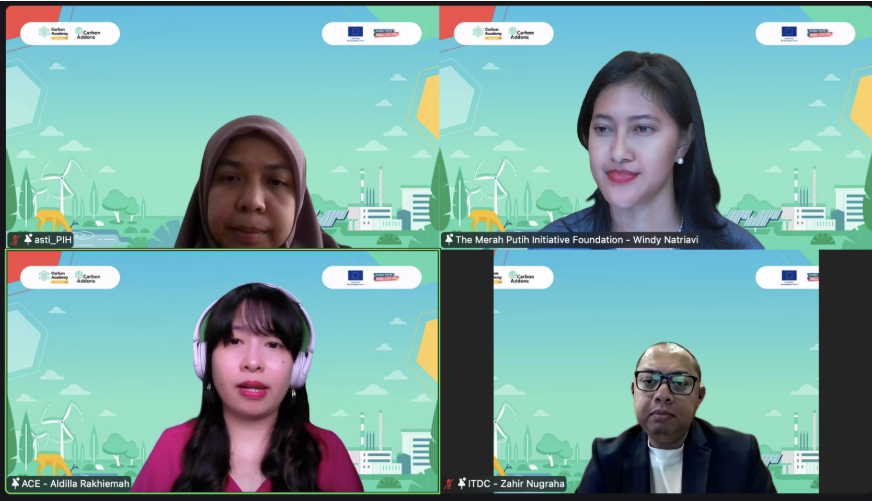
Photo 3. Ms. Astika Andhini, Lead of the Facilitation, Standardisation and Green Industry Implementation Team from Ministry of Industry (top left), Ms. Windy Natriavi, Chief Impact Investing Officer of The Merah Putih Initiative Foundation (top right), Ms. Aldilla Noor Rakhiemah, Project Manager of ACCEPT II (bottom left), Mr. Zahir Satria Nugraha, Senior Vice President of Human Capital of Injourney Tourism Development Corporation (bottom right).
The panel further explored discussion on the expansion of green job opportunities and the pathways needed to ensure that ASEAN talent remains aligned with the evolving demands of the labor market. In this context, Ms. Aldilla highlighted several initiatives aimed at addressing the mismatch between energy education and the growing needs of the renewable energy sector.
These include the ASEAN Low Carbon Building Transitions (ALCBT) initiative, which focuses on low-carbon buildings and collaborates with several universities in Indonesia to develop pilot curricula on the subject. Furthermore, the ASEAN Climate Change and Energy Project (ACCEPT) project, implemented in partnership with Norwegian Ministry of Foreign Affairs and Norwegian Institute of International Affairs, actively works to bring energy and climate issues closer to the public, including by providing a publication platform for Indonesian students to write on topics related to energy and climate.
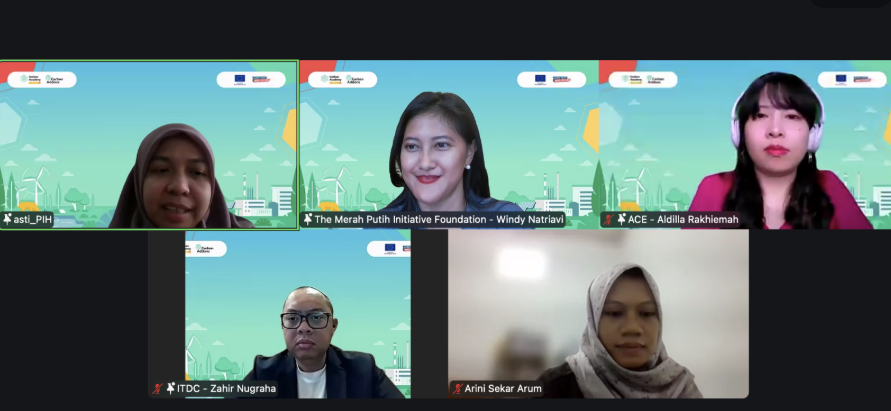
Photo 4. The speakers engaged in question-and-answer session with participants
The panel engaged in an engaging question and answer session with the participants. Among them raised a question addressing the importance of green jobs and their relevant skill. Responded by Mr Zahir, he emphasised that sustainability and green skills are not only important but have become an operational necessity. From an energy perspective, he explained that how a tourism estate demonstrates its sustainability performance significantly influences investor interest, as investors increasingly assess whether their investments generate positive social and environmental impacts.
From his experience, ITDC strives to achieve zero-waste management by implementing practices such as wastewater recycling, desalination, solid waste recycling, composting, and emerging food waste recycling initiatives, all of which enhance efficiency by optimizing resource use. Ultimately, companies will continue to improve green innovation competitions that actively engage in wider industries.
Overall, the session concluded with a growing optimism, highlighting that green jobs are not a mere passing trend but an essential component of the transition toward net-zero. The panel expressed a shared commitment to encouraging broader individual participation in advancing climate action, recognizing the crucial role in helping countries meet their climate targets while strengthening the capacity to actively contribute to energy and climate solutions.
(AAH)
** Join our ASEAN Researchers Network on Climate Change (ARNECC) by registering yourself here. Become a part of our collaborative efforts to address pressing climate challenges and shape a sustainable future.
Detailed information on ACCEPT II can be found at https://accept.aseanenergy.org/
Follow our social media to stay updated on ASEAN’s energy-climate nexus and ACCEPT activities.