
Kota Kinabalu, 9-10 September 2025
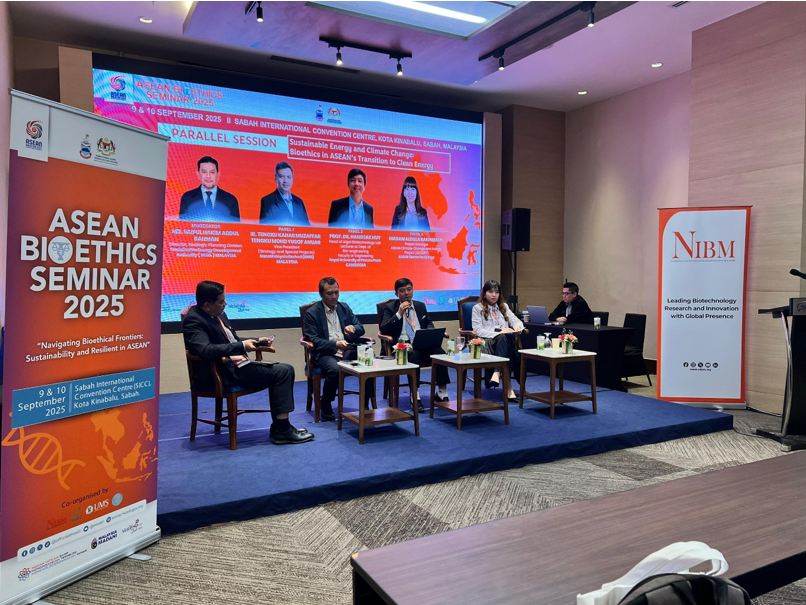
Photo 1. (From left to right) Mr. Saiful Hakim Abdul Rahman, Director of Strategic Planning at the Sustainable Energy Development Authority (SEDA) Malaysia, Tengku Kahar Muzaffar bin Tengku Mohd Yusof Anuar, Vice President Strategy, NanoMalaysia Berhad, Prof Dr. Hangsak Huy, Head of the Algal Biotechnology Lab, Royal University of Phnom Penh, Cambodia, and Aldilla Noor Rakhiemah, Project Manager of ACCEPT II.
The ASEAN Bioethics Seminar 2025: Navigating Bioethical Frontiers: Sustainability and Resilience in ASEAN was organised by the Ministry of Science, Technology and Innovation (MOSTI) Malaysia and officiated by YB Tuan Chang Lih Kang, Minister of Science, Technology and Innovation Malaysia. Held at the Sabah International Convention Centre (SICC), Kota Kinabalu, on 9–10 September 2025, the seminar convened regional policymakers, academics, and experts to explore how bioethics can guide responses to challenges in health, science, environment, and energy, while fostering dialogue on building sustainable and resilient development pathways for ASEAN.
The ASEAN Centre for Energy (ACE), through its ASEAN Climate Change and Energy Project (ACCEPT), contributed to this important conversation by participating in Panel 6: “Sustainable Energy and Climate Change: Bioethics in ASEAN’s Transition to Clean Energy.” ACCEPT was represented by Aldilla Noor Rakhiemah, Project Manager of ACCEPT, who joined distinguished panellists Tengku Kahar Muzaffar bin Tengku Mohd Yusof Anuar (Vice President Strategy, NanoMalaysia Berhad) and Prof Dr. Hangsak Huy (Head of the Algal Biotechnology Lab, Royal University of Phnom Penh, Cambodia). The session was moderated by Mr. Saiful Hakim Abdul Rahman, Director of Strategic Planning at the Sustainable Energy Development Authority (SEDA) Malaysia.
Key Messages from ACCEPT
In her intervention, Aldilla highlighted that ASEAN’s transition to clean energy is not only a technical and financial challenge, but also an ethical one. Every decision, from expanding renewables and developing cross-border power trade to deploying new technologies, affects people’s lives, livelihoods, and rights.
Referring to the 15 ethical principles introduced in the seminar’s opening sessions, she illustrated how concepts such as justice, beneficence, non-maleficence, respect for autonomy, sustainability, benefit-sharing, and transparency resonate in the energy sector.
She outlined several key ethical considerations:
Ethical Challenges in ASEAN’s Regional Strategy
ASEAN’s diversity, Aldilla noted, is both a strength and a challenge in creating a regional clean energy framework. She identified three pressing ethical dilemmas:
She emphasised that these values are already being embedded in ASEAN’s regional framework through the ASEAN Plan of Action for Energy Cooperation (APAEC). For the first time, the upcoming APAEC 2026–2030 will adopt the Just and Inclusive Energy Transition (JIET) as its overarching theme, signalling a collective commitment to embedding justice and inclusivity into ASEAN’s clean energy transition.
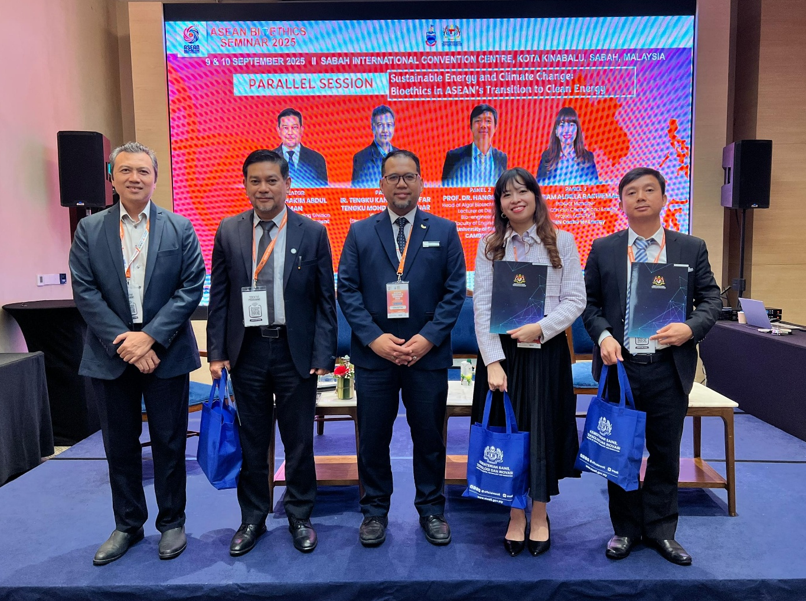
Photo 2. All panellists of Panel 6, with the representative from the Ministry of Science, Technology and Innovation (MOSTI) Malaysia
Guiding Principles for the Future
Aldilla also shared ACCEPT’s work on the Guide to a Just and Inclusive Energy Transition in ASEAN, which sets out ten guiding principles: affordability, accessibility, energy security, sustainability, fair distribution of costs and benefits, widest inclusion and participation, recognition and empowerment, fair economic growth, gender equity, and intergenerational equity.
“These principles,” she explained, “can serve as ASEAN’s ethical compass, respecting our diversity while uniting us around a shared vision: a transition that is not only low-carbon, but also fair, inclusive, and sustainable for all.”
She concluded by stressing that inclusion should not be seen as a delay to climate action but as a driver of its success. “Inclusion is not a brake on decarbonisation—it is the accelerator. By embedding justice, empowerment, and gender equity into urgent climate action, ASEAN can move both faster and more fairly, ensuring that our transition is not only low-carbon, but also just and inclusive.”
Moving Forward
ACCEPT’s participation in the ASEAN Bioethics Seminar 2025 highlights the importance of linking bioethical principles with energy and climate policy. As ASEAN advances towards its net-zero commitments, integrating ethics into decision-making will be critical for building resilience, fairness, and trust.
Through dialogues such as this, ACCEPT continues to support ASEAN in ensuring that the region’s transition to clean energy is grounded not only in technology and finance, but also in the values of justice, inclusivity, and sustainability.
(ANR)
**
Join our ASEAN Researchers Network on Climate Change (ARNECC) by registering yourself here. Become a part of our collaborative efforts to address pressing climate challenges and shape a sustainable future.
Detailed information on ACCEPT II can be found at https://accept.aseanenergy.org/
Follow our social media to stay updated on ASEAN’s energy-climate nexus and ACCEPT activities.